 Save
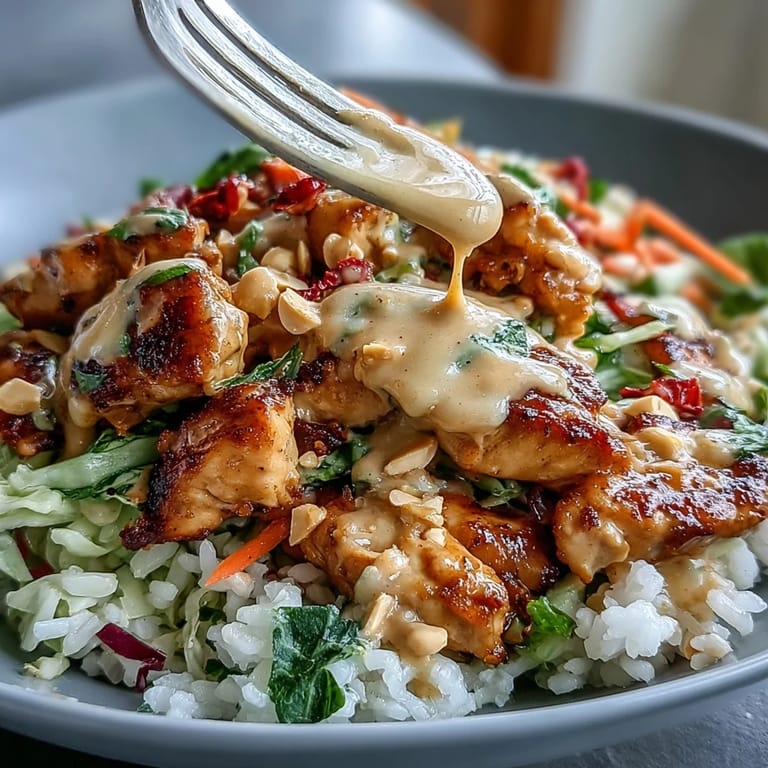
Save There's something about a bowl that just works on a Tuesday afternoon when you're staring down another week of repetitive lunches. I'd been scrolling through photos of Thai street food—that golden light hitting a vendor's cart, the steam rising from a wok—when I realized I could recreate that feeling at home without the three-hour commute. The first time I layered coconut rice with sautéed chicken and drizzled that creamy peanut sauce across everything, my coworker practically inhaled it at her desk, and suddenly this wasn't just meal prep anymore.
I made this for a potluck once where everyone was supposed to bring something 'light,' and I watched someone take a massive second serving while explaining to their friend that yes, this is actually real food and not a wellness influencer's fever dream. That moment taught me that good food doesn't need to announce itself as healthy—it just needs to taste undeniably good, and the nutrition follows naturally.
Ingredients
- Jasmine rice: It has a natural sweetness that plays beautifully with coconut milk, and rinsing it really does make a difference in the final texture—trust the process even though it feels like an extra step.
- Canned coconut milk: Shake it well before opening because that separation isn't a mistake, it's just how it settles, and you want both the thick and thin parts incorporated.
- Boneless, skinless chicken breast: Dicing it smaller ensures even cooking and means it absorbs the soy sauce seasoning throughout rather than just on the surface.
- Creamy peanut butter: The key word is creamy, not natural or powdered—creamy gives you the silky sauce that coats everything perfectly.
- Soy sauce: Buy the kind you actually like to drink in soup because you'll taste it in every component, so it deserves to be good.
- Honey or maple syrup: Both work, but honey dissolves faster into the warm sauce and creates a subtle roundness that balances the salt and acid.
- Rice vinegar: Regular vinegar will taste aggressive here, so don't skip this specific one—it's gentle and bright.
- Fresh cilantro: Buy more than you think you need because half of it will disappear while you're chopping, and some of it needs to survive to the bowl.
- Red cabbage: It stays crisp longer than green cabbage and has a subtle sweetness that complements the peanut sauce without competing with it.
Tired of Takeout? 🥡
Get 10 meals you can make faster than delivery arrives. Seriously.
One email. No spam. Unsubscribe anytime.
Instructions
- Rinse and start the coconut rice:
- Run your jasmine rice under cold water, stirring gently with your fingers until the water runs clear—this removes surface starch and keeps grains separate instead of clumpy. Combine in a saucepan with coconut milk, water, and salt, then bring to a boil and immediately reduce to a simmer, which is when you cover it and walk away.
- Let the rice steam undisturbed:
- This is the hardest part because you'll want to peek, but don't—those 15 minutes of gentle heat followed by 10 minutes of resting while covered is what transforms it from rice into something fragrant and tender. When you finally fluff it with a fork, you'll hear the coconut in every bite.
- Sear the chicken with intention:
- Heat your skillet until a drop of water sizzles immediately, then add oil and wait for it to shimmer before the chicken goes in—this creates a golden edge that tastes caramelized rather than just cooked. The soy sauce and garlic go in right away so they season from the start, and 6 to 8 minutes is all you need if your pieces are roughly the same size.
- Build the peanut sauce in a bowl:
- Whisk the peanut butter with soy sauce first because they emulsify together, then add everything else and taste as you go—the water is your control, added a tablespoon at a time until it's creamy but still coats a spoon. If it breaks or looks separated, don't panic; a tiny bit more heat (microwave is fine) fixes it.
- Prep your vegetables while everything cooks:
- Slice the cabbage thin enough that you can see through it, julienne your carrots so they pick up sauce, and chop cilantro right before assembly so it stays bright and hasn't lost its smell to time and air. Keep lime wedges nearby because they're not optional—they're the final note that makes everything sing.
- Compose each bowl like you're plating in a restaurant:
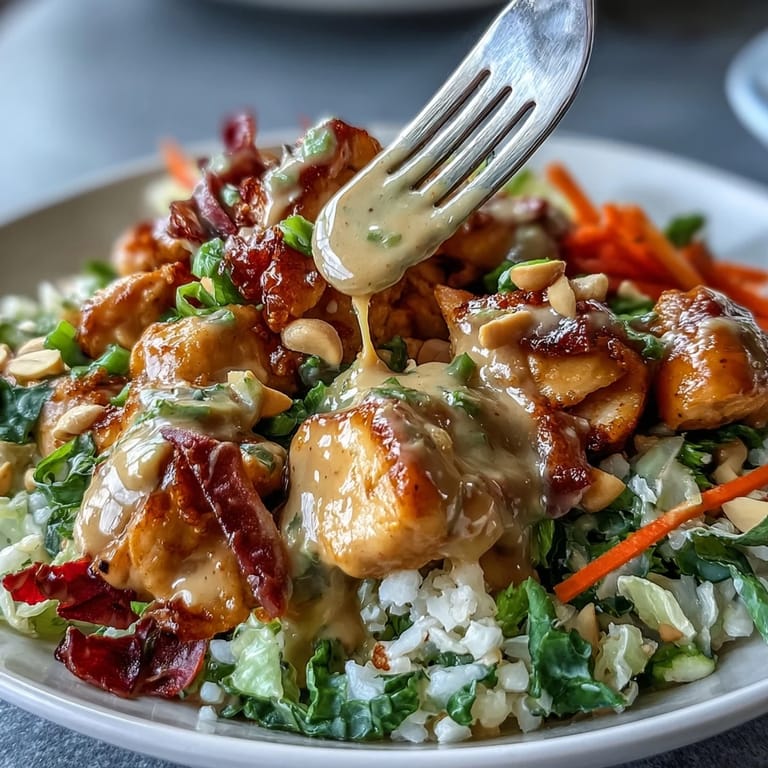
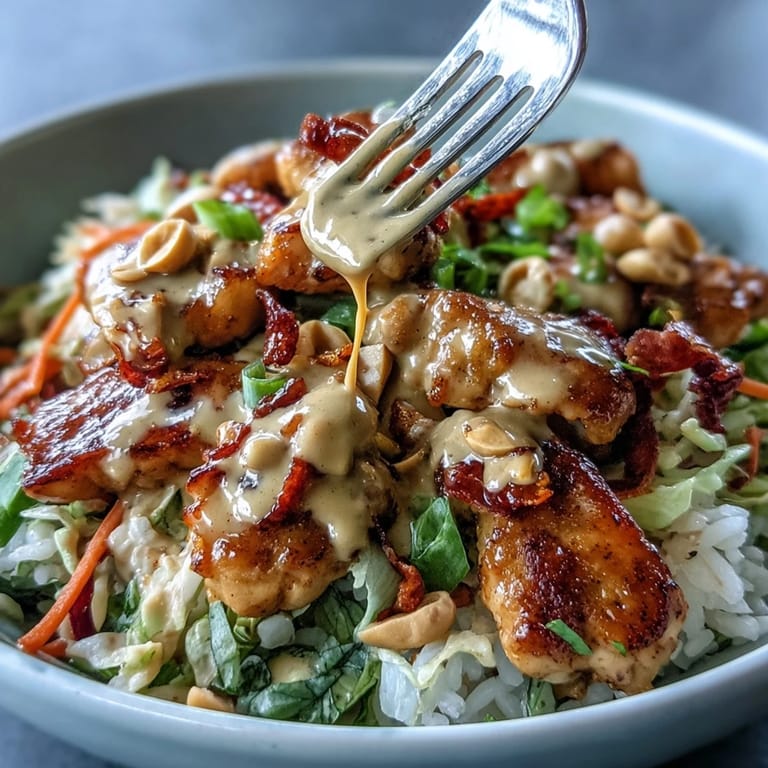
- Start with rice as your base, arrange the warm chicken on top, then add the cool vegetables around it so you get temperature contrast with every bite. Drizzle sauce generously across everything, scatter peanuts and cilantro, then serve immediately while the rice is still warm enough to soften the vegetable edges slightly.
 Save
Save There was a moment when a friend who usually eats very simply asked for the recipe and actually wrote it down in her phone, and that's when I realized this bowl had crossed from 'nice healthy lunch' into 'something people actually want to make again.' It's become my answer to 'what should I bring' and 'what's for dinner' in equal measure.
The Magic of Coconut Rice
Coconut rice is transformative in a way regular rice isn't—it's inherently sweet without being dessert-like, and it soaks up sauce flavors instead of competing with them. The first time I tried making it, I used lite coconut milk thinking I was being healthful, and the result was bland and almost sad, so full-fat canned milk is actually the right choice here. Now I make extra on purpose because cold leftovers are genuinely delicious in a way that surprises people who think rice bowls are only good hot.
Why the Vegetables Matter
This isn't a salad pretending to be a bowl—the vegetables are textural contrast and palate cleansers, they're not supposed to be the main event. Red cabbage has a natural crunch that survives the warmth of the rice, carrots taste slightly sweet when they're shredded fine, and cilantro adds a herbal brightness that keeps you from getting tired of the peanut sauce halfway through. I learned this by accident when I once used soft, cooked vegetables and the whole bowl became one-note and exhausting to eat through a whole serving.
Assembly and Customization
The beauty of a bowl is that everyone can be involved in building their own, which makes it feel more like an experience than just eating lunch. Some people will want extra sauce, some will skip peanuts for allergy reasons, others will add cucumber or avocado because that's what sounds good in their body that day. Here's what I've learned works best from various experiments:
- Toast your peanuts lightly before serving because room temperature ones taste flat and sad, while warm ones taste intentional.
- Serve lime wedges on the side and let people squeeze their own because the acid should be adjustable to personal preference.
- Make the sauce the day before if you can, because the flavors meld overnight and taste more integrated and sophisticated.
 Save
Save This bowl became my secret weapon for turning 'I don't know what to eat' into something that tastes like you planned your meal instead of just scraping something together. It's nourishing in the way that feels good in your body, not punishing or restrictive, which is when food stops being something to do and becomes something to actually enjoy.
Recipe FAQs
- → Can I make this bowl ahead for meal prep?
Yes, these bowls meal prep beautifully. Store components separately in airtight containers—the peanut sauce keeps refrigerated for up to 5 days. Reheat the chicken and rice gently, then add fresh toppings just before serving.
- → What's the best way to achieve perfect coconut rice?
Rinse jasmine rice until water runs clear to remove excess starch. Combine with coconut milk, water, and salt, then bring to a boil. Cover, reduce to low, and simmer 15 minutes without lifting the lid. Let steam off-heat for 10 minutes before fluffing.
- → How can I adjust the peanut sauce consistency?
Start by whisking all sauce ingredients together. If too thick, add warm water one tablespoon at a time until you reach desired drizzling consistency. The sauce thickens when chilled, so thin with additional water when reheating.
- → What vegetarian substitutions work well?
Replace diced chicken with pressed tofu cubes or tempeh strips. Sauté the same way with soy sauce, garlic, and pepper until golden and slightly crisp. These alternatives absorb flavors beautifully and maintain protein content.
- → Can I add more vegetables to the bowl?
Absolutely. Sliced cucumber, edamame, bell pepper strips, snap peas, or shredded broccoli slaw all complement the Thai flavors. Add raw for crunch or quickly stir-fry alongside the chicken.
- → Is the peanut sauce spicy?
The sauce features mild chili flakes for subtle warmth. For more heat, increase chili flakes or add sriracha. Omit entirely for a family-friendly version. The lime and honey balance any spice beautifully.