 Save
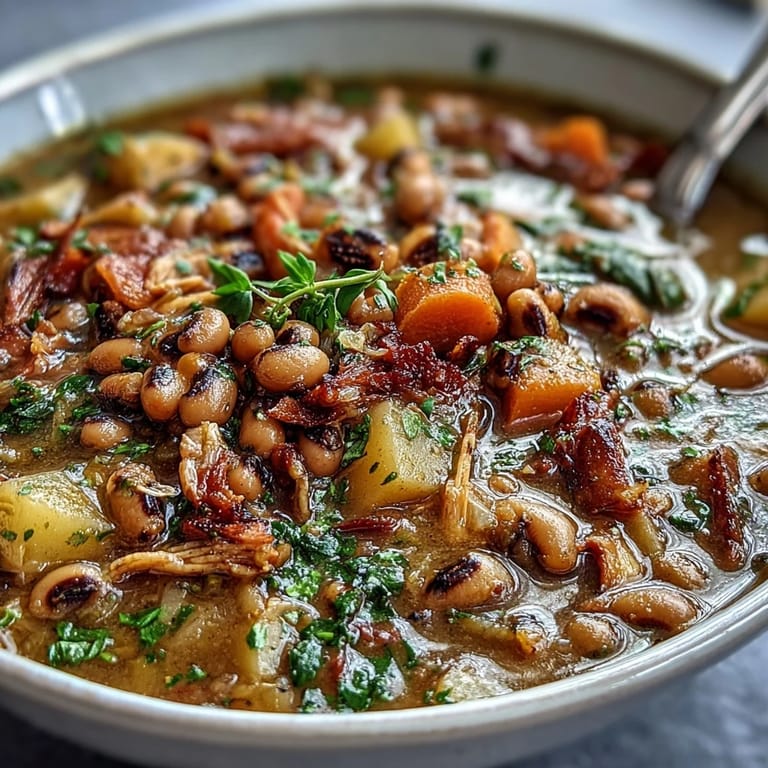
Save There's something about the smell of smoked ham hocks hitting a hot pot that takes me straight to my grandmother's kitchen on New Year's Day. She never measured anything—just grabbed what felt right and let the stove do the talking. Years later, I finally understood what she was doing: building layers of flavor that somehow taste like comfort and tradition in every spoonful. This black-eyed pea stew is that same magic, except now I actually know why it works so well.
I made this for my brother's surprise birthday dinner on a freezing February evening, and he actually got quiet while eating—the highest compliment in our family. The stew had been simmering for hours by the time everyone arrived, and the timing was perfect. He still texts me for the recipe whenever he wants to impress someone.
Ingredients
- Smoked ham hocks (2, about 1.5 lbs): These are the soul of the stew—buy them from a butcher counter if you can, they're usually fresher and often cheaper than the pre-packaged ones.
- Dried black-eyed peas (2 cups, soaked overnight): Soaking them overnight isn't just tradition, it cuts the cooking time noticeably and makes them absorb flavor better than canned versions, though canned work fine if you're short on time.
- Onion, carrots, and celery (1 large onion, 2 carrots, 2 stalks): This trio is the foundation of everything good in this pot—dice them uniform-ish so they cook at the same speed.
- Potatoes (2 medium, cut into 1-inch cubes): They thicken the broth naturally as they soften, so don't skip them or use tiny pieces that will disappear.
- Diced tomatoes (1 can, 14.5 oz with juice): The juice is where the flavor lives—never drain it out, just let it all go in.
- Garlic (3 cloves, minced): Add this after the softer vegetables so it doesn't burn and turn bitter.
- Broth (6 cups low-sodium chicken or vegetable): Low-sodium lets the ham and smoked paprika shine without oversalting, and you can always adjust salt at the end.
- Bay leaves (2): These gentle flavor-adders need to stay in during cooking and come out before serving—don't forget or someone will bite into one.
- Thyme, smoked paprika, black pepper, cayenne (1 tsp, 1/2 tsp, 1/2 tsp, 1/4 tsp): The smoked paprika is the secret player here—it doubles down on the smokiness from the ham and makes everything taste intentional.
Tired of Takeout? 🥡
Get 10 meals you can make faster than delivery arrives. Seriously.
One email. No spam. Unsubscribe anytime.
Instructions
- Soak the peas the night before (or shortcut it):
- If you're using dried peas, cover them with plenty of water and let them sit overnight—they'll be tender faster and cook more evenly. If you forgot and it's last-minute, canned peas work just fine, no shame in that.
- Build your flavor base:
- Heat a splash of oil in your pot over medium heat and add the diced onion, carrots, and celery—let them get soft and fragrant for about 5 minutes, stirring occasionally. This is the moment the kitchen starts smelling like something good is about to happen.
- Wake up the garlic:
- Add your minced garlic and cook for just 1 minute until it's fragrant—any longer and it starts to bitter, so watch the clock. You'll know it's ready when the smell becomes almost aggressive in the best way.
- Add everything and let it go:
- Throw in the ham hocks, drained peas, cubed potatoes, tomatoes with their juice, broth, bay leaves, and all your seasonings. Stir it together so everything is distributed evenly, then bring it to a boil.
- Lower the heat and let time do the work:
- Once it's boiling, reduce the heat to low, cover the pot, and let it simmer for 2 hours, stirring every 20 minutes or so. The peas will soften, the ham will start falling off the bone, and the broth will deepen in color and flavor.
- Shred the ham and return it:
- After 2 hours, carefully pull out the ham hocks—they'll be hot—and let them cool just enough to handle. Shred the meat from the bone, toss out the skin and excess fat, then stir the shredded meat back into the pot.
- Taste and adjust:
- This is crucial—taste it and add salt if it needs it. If the broth seems thin, leave the lid off and let it simmer another 10 to 15 minutes to concentrate the flavors and thicken slightly.
- Finish and serve:
- Remove those bay leaves, ladle the stew into bowls, top with fresh parsley if you have it, and pass hot sauce on the side for anyone who wants to turn up the heat. The best part? Leftovers only taste better the next day.
 Save
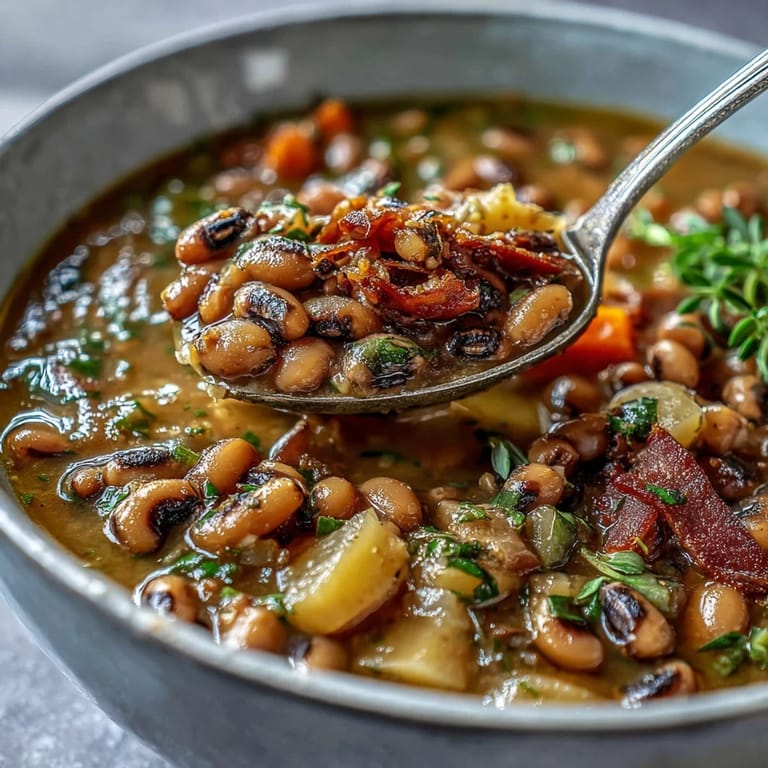
Save The moment that really sold me on this recipe was watching my daughter ask for thirds and actually mean it. She's at the age where most comfort foods feel babyish to her, but something about this stew—the way the peas are tender but not mushy, how the ham flavor wraps around everything—made her feel like she was eating something sophisticated. That's when I knew this was keeper material.
When to Make This Stew
This is the kind of dish that rewards patience and planning, which makes it perfect for weekends or days when you know you'll be home. The overnight soak for the peas means you need to think ahead, but that early-morning step becomes part of the ritual. Winter evenings are its natural home, but I've made it in August after a farmer's market run just because the ham hocks looked too good to pass up.
Variations That Actually Work
Once you understand how this stew comes together, you can play with it without losing what makes it special. Swap the potatoes for sweet potatoes if you want earthiness, or add a handful of kale in the last few minutes for color and nutrition. I've done a vegetarian version with smoked paprika, liquid smoke, and extra thyme, and it honestly holds its own—though it's a different thing entirely.
Making It Your Own
The beauty of a stew like this is that it teaches you how to cook, not just how to follow steps. You learn why certain ingredients go in at certain times, how flavors build, and what makes something satisfying versus just filling. Once you've made it twice, you'll trust your instincts enough to adjust seasonings mid-cooking or add whatever vegetable is hanging around in your crisper drawer.
- Cornbread on the side turns this from dinner into an experience, especially if it's still warm with melting butter.
- Serve it over rice instead of in a bowl if you want to stretch it further or make it less heavy.
- Make a double batch and freeze half—it reheats perfectly and tastes even better than the first time around.
 Save
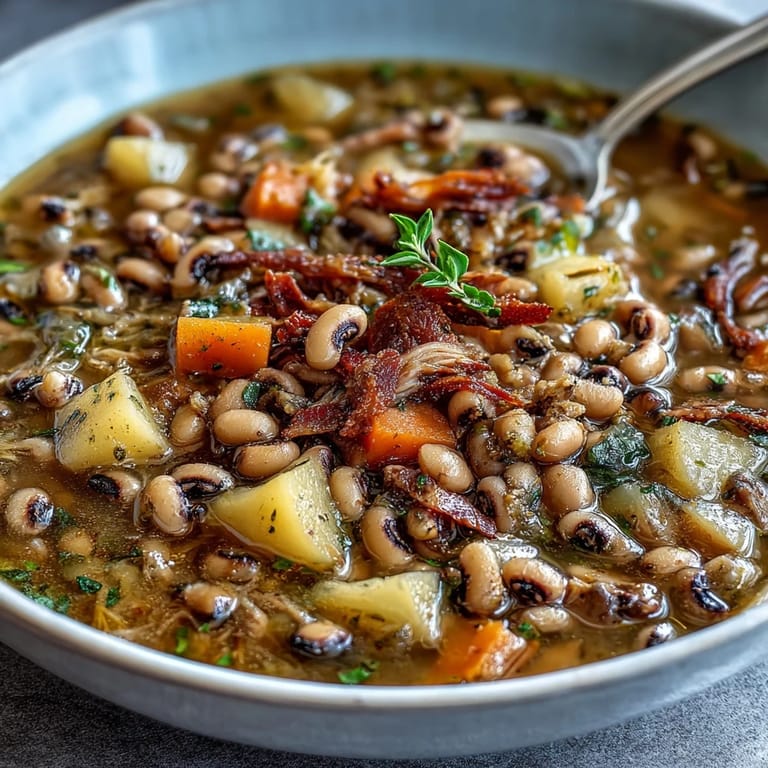
Save This stew has a way of becoming tradition the moment you make it, which is really what good food does. Every time you make it, it gets better because you know what to expect and how to tweak it to your taste.
Recipe FAQs
- → How long should black-eyed peas soak before cooking?
Soak dried black-eyed peas overnight in plenty of water to soften them and reduce cooking time. If using canned, rinse and drain before adding.
- → Can smoked ham hocks be substituted?
Yes, smoked turkey legs or a smoky vegetarian option like liquid smoke can provide a similar depth of flavor.
- → What vegetables add best flavor to the stew?
Onion, carrots, celery, diced potatoes, and tomatoes create a balanced flavor and hearty texture in this stew.
- → How do you thicken the stew if it's too thin?
Simmer uncovered for 10–15 minutes to reduce liquid and thicken the stew naturally.
- → What sides complement this dish well?
Cornbread or steamed rice are excellent choices that soak up the rich broth and enhance the meal.
- → Is this stew gluten-free?
Yes, as long as the broth and canned tomatoes used are verified gluten-free, the dish remains safe for gluten-free diets.