 Save
Save My grandmother used to say that black-eyed peas on New Year's Day weren't just dinner, they were insurance against a year of bad luck. She'd start soaking them the night before, and by morning, the kitchen smelled like promise. Years later, I realized she was right, though maybe not about the luck—it was the comfort of tradition, the way a single bowl could connect us to everyone who'd made this dish before us.
I once made this for a friend who'd moved South and was desperately homesick on January first. Watching her take that first spoonful and just close her eyes—that's when I understood this wasn't a recipe, it was a love letter. She came back every New Year after that, no invitation needed.
Ingredients
- Black-eyed peas (1 pound, dried): These little legumes are the heart of the dish, and sorting through them by hand feels like a ritual in itself—you'll catch any small stones hiding among them.
- Smoked pork neck bones or ham hocks (1½ pounds): This is where the magic happens; the smoke and fat dissolve into the liquid and season everything.
- Onion, celery, and green bell pepper (the holy trinity): These three aromatics are the foundation of every good Southern pot, and together they build a flavor base that makes your kitchen smell like home.
- Garlic (4 cloves, minced): Don't skip the mincing step—whole cloves get lost, but minced garlic blooms into the broth immediately.
- Water or chicken broth (7 cups): Broth adds richness, but water lets the pork and spices speak for themselves; I use broth in winter and water in summer.
- Creole seasoning (1½ teaspoons): This is the seasoning blend that ties everything together—cayenne, paprika, garlic, and thyme all in one shake.
- Bay leaf, thyme, smoked paprika, black pepper (the spice crew): Bay leaf adds a subtle bitterness that keeps the dish grounded, while smoked paprika echoes the smokiness of the pork.
- Salt (1 teaspoon, to taste): Add it at the end so you don't over-salt the liquid as it reduces.
- Fresh parsley and hot sauce (optional garnish): Parsley brightens the finished dish, and hot sauce is there for anyone who wants to push the heat.
Tired of Takeout? 🥡
Get 10 meals you can make faster than delivery arrives. Seriously.
One email. No spam. Unsubscribe anytime.
Instructions
- Soak your peas overnight (or take the quick route):
- Cover the peas with cold water in a large bowl and let them sit overnight—this softens them gently so they cook evenly. If you're short on time, pour boiling water over them, cover the bowl, and let them sit for an hour; either way works beautifully.
- Build your flavor base:
- Heat a splash of oil in your Dutch oven and add the onion, celery, and bell pepper together—this is called sweating the vegetables, and you're looking for them to soften and release their sweetness, about 5 minutes. The kitchen will start smelling insanely good.
- Wake up the garlic:
- Stir in the minced garlic and let it cook for just one minute until fragrant; any longer and it turns bitter. You'll smell that sharp, bright garlic aroma rise up.
- Bring everything together:
- Add your drained peas, the smoked pork, the liquid, and all your seasonings at once—the pot becomes this beautiful medley of ingredients about to become something warm and whole. Give it a good stir so nothing sticks to the bottom.
- Simmer low and slow:
- Bring the pot to a boil, then drop the heat to low, cover it, and let it bubble away gently for about an hour and a half. Stir it occasionally so the bottom doesn't scorch, and the peas will gradually soften into creamy tenderness while the pork becomes so tender it falls apart.
- Extract and shred the pork:
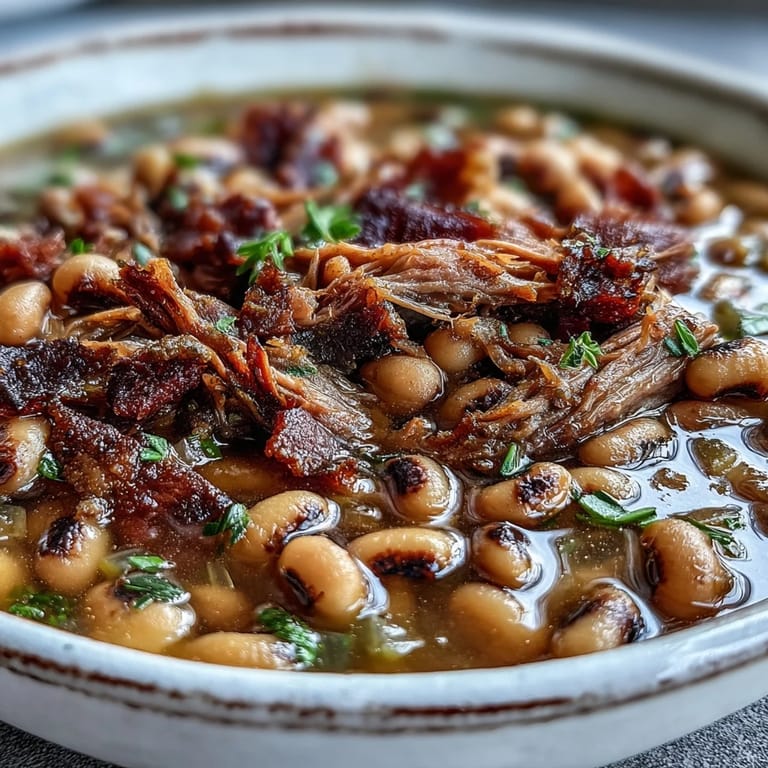
- Once the peas are soft and the pork is falling off the bone, carefully remove the bones and any meat clinging to them. Shred that meat back into the pot and discard the bones and excess fat—this creates little pockets of smoky, savory goodness throughout.
- Taste and adjust:
- Remove the bay leaf and taste the broth; add salt gradually until it tastes like home to you. Season to taste means this is your moment to make it yours.
- Serve with intention:
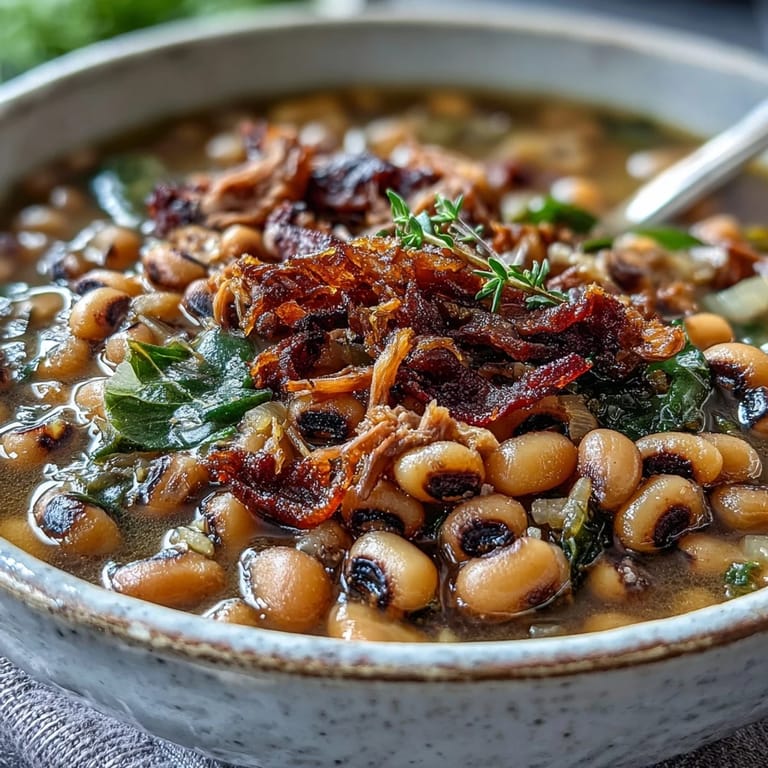
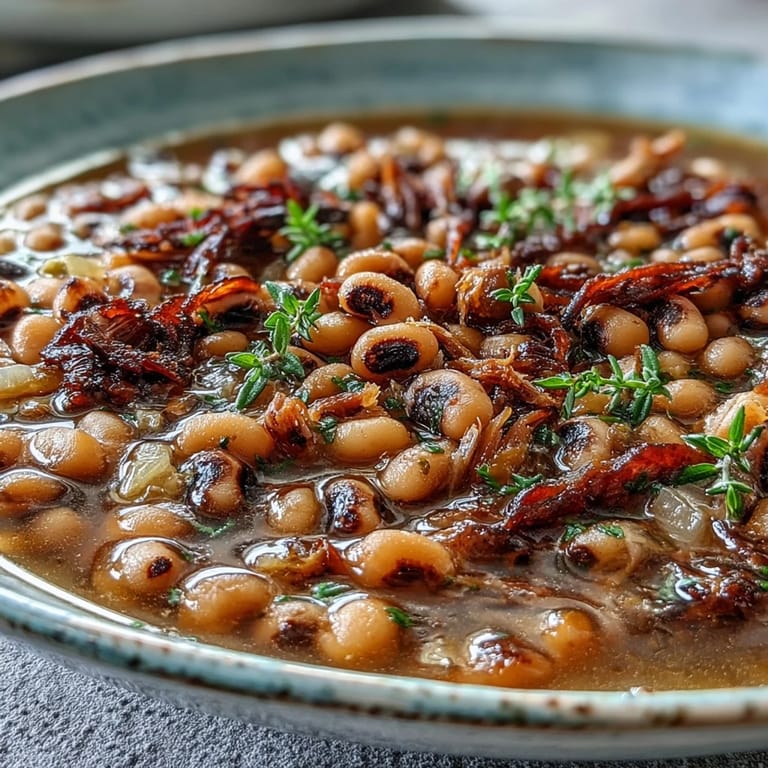
- Ladle the peas and their broth into bowls, garnish with fresh parsley if you have it, and pass hot sauce to anyone who wants to turn up the heat. Serve over rice or alongside cornbread.
 Save
Save There's a moment near the end of cooking when you lift the lid and the steam hits your face, and the smell is so good you can almost taste it on your tongue before the spoon even reaches your mouth. That's when you know you've done it right.
The Story Behind New Year's Black-Eyed Peas
The tradition of eating black-eyed peas on New Year's Day runs deep in Southern culture, rooted in both African and Jewish traditions—the peas represent coins, a wish for prosperity in the year ahead. But honestly, the real magic isn't in superstition; it's in the act of gathering around a pot of something slow-cooked and nourishing right when the year feels brand new and full of possibility. Every culture has their own version of this ritual, and this one belongs to the South.
How to Make It Your Own
I've learned that recipes are invitations, not rules. Some people add tomatoes and hot peppers for brightness and heat; others throw in okra for texture or a splash of vinegar for tang. The foundation is always the same—peas, pork, aromatics, time—but the details are where your kitchen personality shines through.
Storage, Freezing, and Reheating
This dish actually improves after a day or two in the refrigerator, once the flavors have had time to settle into one another like old friends. Leftovers keep for about four days in the fridge, and they freeze beautifully for up to three months—which means you can make a double batch and have comfort food waiting for a rough Tuesday in March.
- To reheat from frozen, thaw overnight in the fridge and warm gently on the stovetop over medium-low heat, stirring occasionally and adding a splash of broth if it's gotten too thick.
- Frozen peas never lose their tender texture, so you're not sacrificing quality for convenience.
- Some people swear the flavor actually deepens after freezing, something about how the seasoning continues developing even in cold storage.
 Save
Save This is the kind of dish that reminds you why people gather in kitchens, why tradition matters, and why something as simple as beans and meat and time can feel like the most generous thing you can offer someone. Make it, share it, let it become yours.
Recipe FAQs
- → How do I soak black-eyed peas quickly?
Cover the peas with boiling water and let them sit for 1 hour, then drain and rinse before cooking.
- → What can I use instead of smoked pork?
For a vegetarian alternative, omit smoked pork and add smoked paprika with a splash of liquid smoke for depth.
- → Can I prepare this dish in advance?
Yes, leftovers freeze well for up to 3 months and can be reheated without losing flavor.
- → What spices enhance the flavor of black-eyed peas?
Creole seasoning, bay leaf, thyme, smoked paprika, and black pepper create a rich, aromatic profile.
- → What sides pair well with this dish?
Traditional accompaniments include rice, cornbread, and collard greens for a complete Southern meal.