 Save
Save My neighbor brought this to a potluck on a gray November afternoon, and I watched people actually abandon their conversations mid-sentence to take another bite. She later confessed she'd made it for a Christmas dinner years ago, and it somehow became the dish people requested instead of asking for the turkey recipe. I've since learned that creamy au gratin potatoes have a quiet magic—they're not flashy, but they make everyone feel cared for.
I made this for the first time when my partner mentioned offhandedly that they'd never had proper au gratin potatoes, and I couldn't let that stand. The aroma that filled our kitchen was so intoxicating that by the time the foil came off, I was genuinely nervous the result wouldn't match the hype I'd built up in my own head. It exceeded expectations, and we ended up eating it for three nights straight, rearranging our meals around the leftovers.
Ingredients
- Yukon Gold or Russet potatoes (2 lbs): Yukon Golds stay creamy and don't break apart, while Russets are starchy and also work beautifully—choose based on what you prefer in texture.
- Heavy cream and whole milk (3 cups total): The combination matters; using only cream makes it too rich, and the milk balances it into something that feels indulgent but not overwhelming.
- Garlic cloves (2, minced): Fresh garlic whispered into warm cream tastes completely different than jarred; don't skip this step.
- Nutmeg (1/4 teaspoon): This spice is the secret most people miss—it sounds odd until you taste it, then you understand why French cooks consider it essential.
- Gruyère and Parmesan (2 cups combined): Gruyère melts into creamy pools while Parmesan adds a sharpness that keeps the dish from tasting one-dimensional.
Tired of Takeout? 🥡
Get 10 meals you can make faster than delivery arrives. Seriously.
One email. No spam. Unsubscribe anytime.
Instructions
- Set your oven and prepare:
- Preheat to 375°F and butter your baking dish generously so the edges don't stick. This temperature is forgiving—hot enough to bake through but gentle enough that the cream won't scorch.
- Build the cream sauce:
- Combine cream, milk, garlic, salt, pepper, and nutmeg in a saucepan and heat gently until you see small wisps of steam. You're infusing flavors here, not boiling—rushing this step changes the whole dish.
- Layer your foundation:
- Spread half the potatoes in an even layer, then sprinkle half the cheese over them. The cheese melts into the potatoes as they cook, so distribution matters.
- Complete the layers:
- Add the remaining potatoes in a single layer, pour the warm cream mixture evenly across everything, then top with the last of the cheese. This three-layer approach ensures every forkful has cream and cheese.
- Bake covered then uncovered:
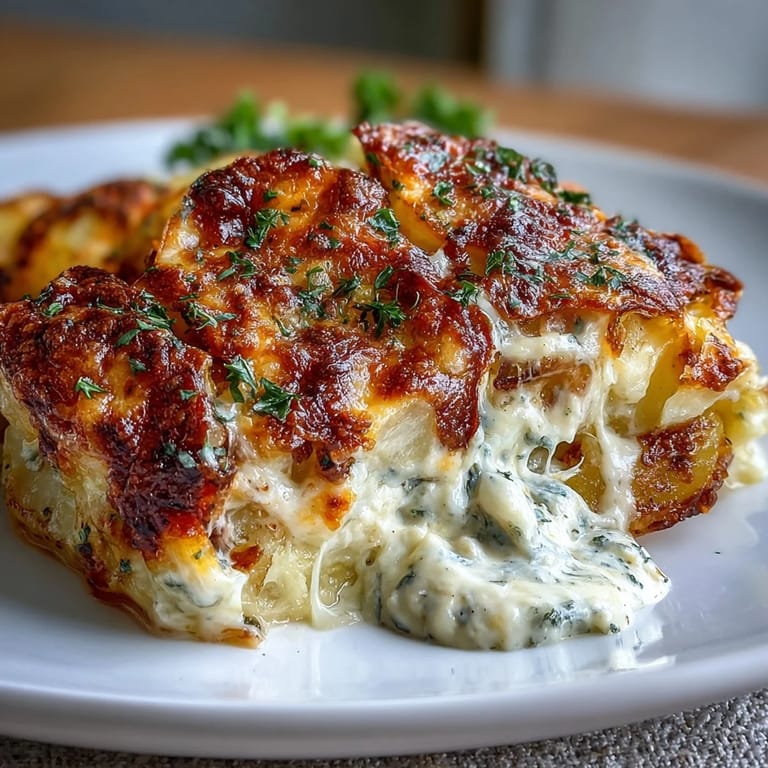
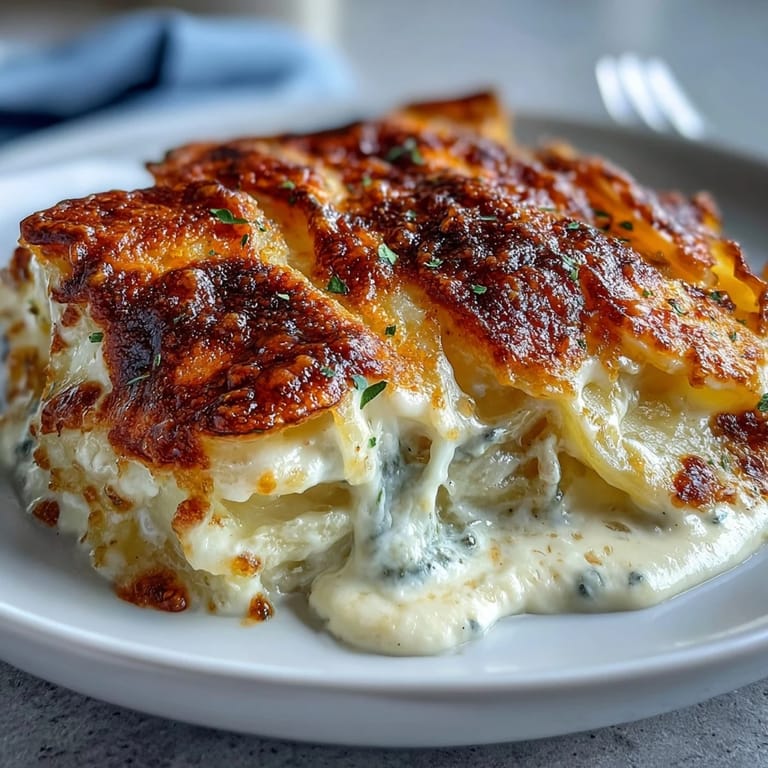
- The foil keeps things gentle for 40 minutes while the potatoes soften, then you remove it for the final 20-25 minutes to develop that golden, slightly crispy top. You'll know it's done when the top is burnished and a knife glides through a potato easily.
- Rest before serving:
- Let it sit for 10 minutes—this gives everything time to set slightly so it holds together on the plate. Garnish with fresh chives or parsley if you have them, though it's perfect as is.
 Save
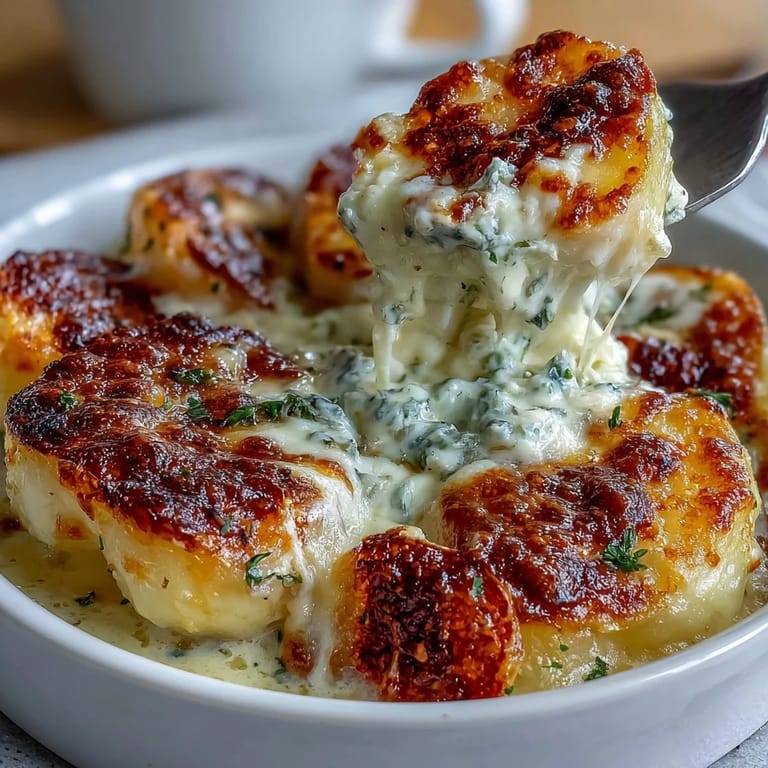
Save There was a moment when I pulled this out of the oven and my kitchen filled with this wave of warmth and garlic and cheese, and my partner walked in asking what smelled like heaven. That's when I realized this isn't just a side dish—it's the kind of food that makes people feel like they're sitting at a table where they're actually wanted.
A Word on Cheese Selection
Gruyère is the traditional choice because it has a slight nuttiness that complements potatoes beautifully, but I've made this with sharp white cheddar when Gruyère wasn't available and nobody complained. The key is using cheese that melts smoothly and has real flavor—avoid pre-shredded varieties if possible, because they often contain anti-caking agents that make the sauce grainy. Parmesan adds a salty punch that prevents the dish from tasting dull, so don't skip it even if you're tempted to double down on Gruyère alone.
Timing and Make-Ahead Magic
You can assemble this entirely the morning of your dinner, cover it with plastic wrap instead of foil, and refrigerate it until an hour before guests arrive. Just add 10-15 minutes to your baking time if you're baking from cold, since the potatoes will take longer to warm through. Leftovers reheat beautifully in a 300°F oven covered with foil for about 20 minutes, and honestly, they taste richer the next day.
Flavor Variations That Work
I once layered thin slices of sweet onion between the potatoes and discovered this hidden sweetness that made everything taste like autumn. Another time, I stirred a teaspoon of Dijon mustard into the cream sauce and it added a subtle sophistication nobody could quite identify. The beauty of this dish is that it's a foundation—respectful enough to traditional preparation that changes feel like improvements rather than shortcuts.
- Thinly sliced caramelized onions add sweetness and depth without changing the cooking time.
- A pinch of thyme or herbes de Provence in the cream sauce creates an earthiness that makes you sound more experienced than you are.
- If you ever have truffle oil, one small drizzle over the finished dish transforms it into something truly special.
 Save
Save This is the kind of dish that ends up on your table year after year because it works, tastes like home, and makes everyone at the table feel a little bit more connected. Make it once and you'll understand why it's lasted this long.
Recipe FAQs
- → What type of potatoes work best?
Yukon Gold or Russet potatoes are ideal for layering due to their texture and ability to hold shape during baking.
- → Can I use different cheeses?
Gruyère provides a nutty flavor, but sharp white cheddar can be a good substitute for a slightly different taste.
- → How is the cream sauce prepared?
The sauce is gently heated with heavy cream, whole milk, minced garlic, salt, pepper, and nutmeg until just steaming to blend flavors without boiling.
- → How do I check for doneness?
The potatoes are done when tender to a knife and the top is golden brown and bubbly after baking.
- → Can I add other ingredients between layers?
Thinly sliced sweet onions can be added between potato layers for extra sweetness and depth of flavor.
- → How should I garnish the finished dish?
Chopped fresh chives or parsley add a fresh, herbal note and brighten the rich flavor once the dish is served.