 Save
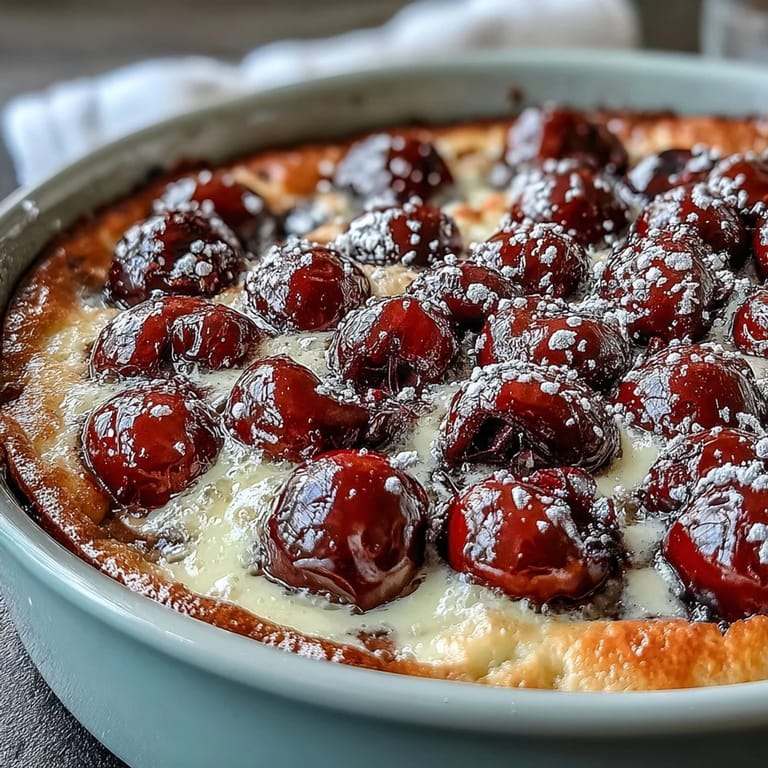
Save Summer always sneaks into my kitchen the moment I spot fresh cherries at the market. The first time I made clafoutis, I remember the sizzle of melting butter in the dish and my cat batting at a stray cherry pit—a scene that had nothing to do with France, but everything to do with good food. Vanilla bean perfumes everything, and the custard puffs up like a soft duvet around gleaming fruit. It looks fancy, but it's the kind of dessert that begs you to dig in with a big spoon. Somehow, making clafoutis makes an ordinary afternoon feel like a little celebration.
One quiet Sunday, I brought this to a backyard gathering, unsure if anyone would even know what clafoutis was. By the end, a spoonful was passed around, and people raved about the warm cherries and fragrant vanilla—no crumbs left, just powdered sugar dustings on fingertips and grins all around.
Ingredients
- Fresh sweet cherries: Using plump cherries really makes the filling pop with flavor; I always taste one or two before baking.
- Large eggs: Room temperature eggs blend more smoothly into the batter, avoiding lumps.
- Granulated sugar: This adds subtle sweetness without overpowering the delicate vanilla.
- Vanilla bean: Tiny seeds scattered throughout the custard boost aroma and make it feel special; if you must, swap for extract but use real bean if you can.
- All-purpose flour: Just enough to give the custard structure—sifting helps prevent any pockets of flour.
- Salt: A pinch sharpens all the other flavors—don’t forget it.
- Whole milk and heavy cream: The combo is what keeps the custard rich but not too dense.
- Unsalted butter: Adds silkiness without excess salt—melted and cooled keeps the texture right.
- Butter for greasing the pan: Generous greasing is key to those lovely golden edges.
- Powdered sugar: A final dusting before serving makes it look celebratory (and covers any cracks!).
Tired of Takeout? 🥡
Get 10 meals you can make faster than delivery arrives. Seriously.
One email. No spam. Unsubscribe anytime.
Instructions
- Prep your dish:
- Heat the oven to 180°C (350°F) and generously butter a 24 cm (9–10 inch) baking dish—every corner needs a slick coat for that perfect release.
- Arrange the cherries:
- Scatter the pitted cherries in an even layer, listening for their little thud as they hit the dish—try not to snack on too many just yet.
- Make the batter:
- Whisk eggs and sugar until pale and a bit foamy, losing yourself in the rhythmic sound.
- Infuse with vanilla:
- Scrape in vanilla bean seeds and stir in flour and salt until smooth; I always pause to inhale the scent here.
- Blend in dairy:
- Drizzle in milk, cream, then melted butter, mixing until silky and lump free—the batter should look pourable and glossy.
- Combine fruit and custard:
- Slowly pour the batter over the cherries, watching how some float and others sink beneath the surface.
- Bake:
- Slide into the oven and bake for 35–40 minutes, until puffed, edges are golden, and the center has the gentlest wobble.
- Cool then finish:
- Let it cool for 15 minutes, then sift powdered sugar on top before slicing into wedges.
- Serve:
- Enjoy warm or at room temperature—preferably with espresso or a lazy breeze nearby.
 Save
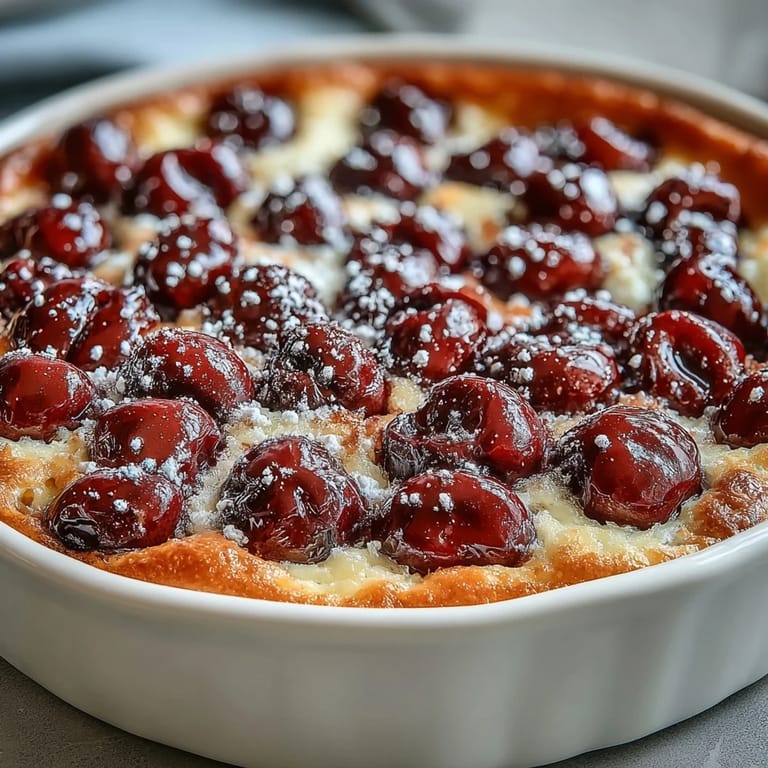
Save Slicing into clafoutis at the table, I remember the laughter when powdered sugar dusted my friend's shirt, and we called it an edible souvenir. There's something undeniably festive about serving a dessert that looks so impressive for such little fuss.
How to Pick Great Cherries
The best clafoutis truly starts with the freshest cherries—ripe, glossy, and plump. If you can, taste before you buy: the juicier, the better. Overly soft or bruised cherries just won’t do, and will make the custard soppy. I learned the hard way that underripe cherries mean a tart clafoutis, so be picky!
Making It Ahead or Substituting Fruit
If you want to get ahead, you can pit the cherries and store them in the fridge a day before baking. Sometimes, I swap half the cherries with sliced apricots or plums—just as unforgettable, but in a different way. Any stone fruit works as long as it’s ripe, and sometimes the unexpected combos turn out best.
Serving, Storing, and Little Extras
Leftover clafoutis (if that ever happens) tastes lovely cold or gently reheated the next day—cover it loosely in the fridge. A scoop of vanilla ice cream or a dollop of crème fraîche takes things up a notch without much trouble. Don’t forget to wipe off excess powdered sugar before storing to avoid stickiness!
- Let it cool slightly before slicing to get neat wedges.
- Always use real vanilla bean for maximum aroma when you can.
- If using other fruit, reduce the sugar if they are extra sweet.
 Save
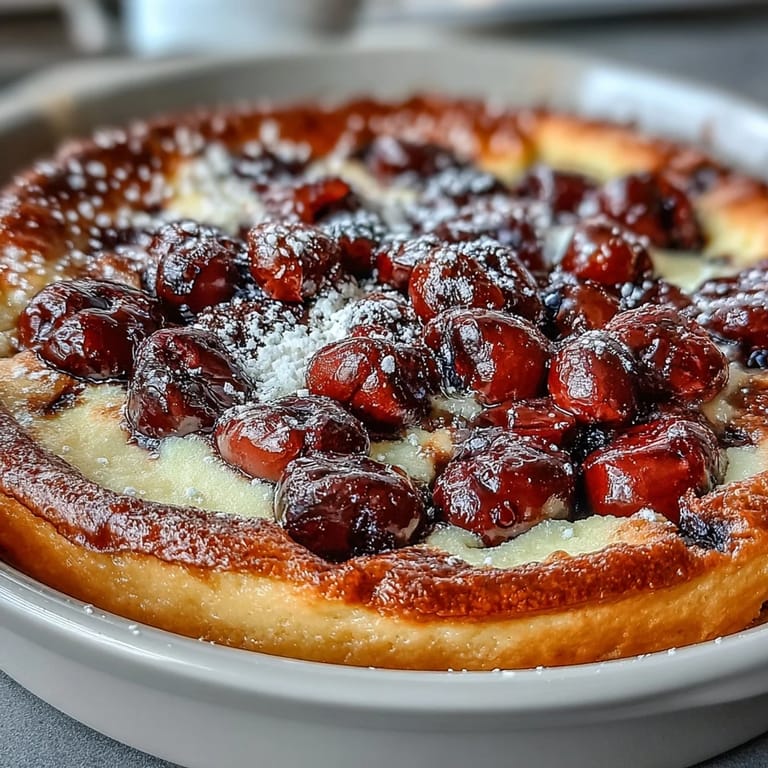
Save This clafoutis has never failed to lure happy sighs to the table. I hope it brings you a little slice of joy, even on the simplest days.
Recipe FAQs
- → Should I pit the cherries?
Pitting makes the dessert easier to eat and safer for guests, but leaving pits is traditional and adds a subtle almond-like note. If you leave them, warn diners about stones.
- → Can I use frozen cherries?
Yes. Thaw and drain excess liquid to avoid a soggy base, then proceed as directed. You may need a few extra minutes of baking to evaporate added moisture.
- → Any good milk substitutions?
Use full-fat dairy for the creamiest custard. For dairy-free options, try unsweetened almond or oat milk plus a splash of coconut cream to mimic richness; texture will be slightly lighter.
- → How do I know when it's done?
The clafoutis should be puffed, lightly golden and just set in the center. It will continue to firm as it cools; avoid overbaking to keep a tender custard texture.
- → Can I make it ahead and reheat?
Yes. Store covered in the refrigerator for up to 3 days. Reheat slices gently in a low 150°C oven for 10–12 minutes or warm briefly in the microwave before serving.
- → How can I make it gluten-free?
Substitute a 1:1 gluten-free flour blend or a mix of rice flour and tapioca. Expect a slightly different crumb and check doneness earlier, as some blends brown faster.