 Save
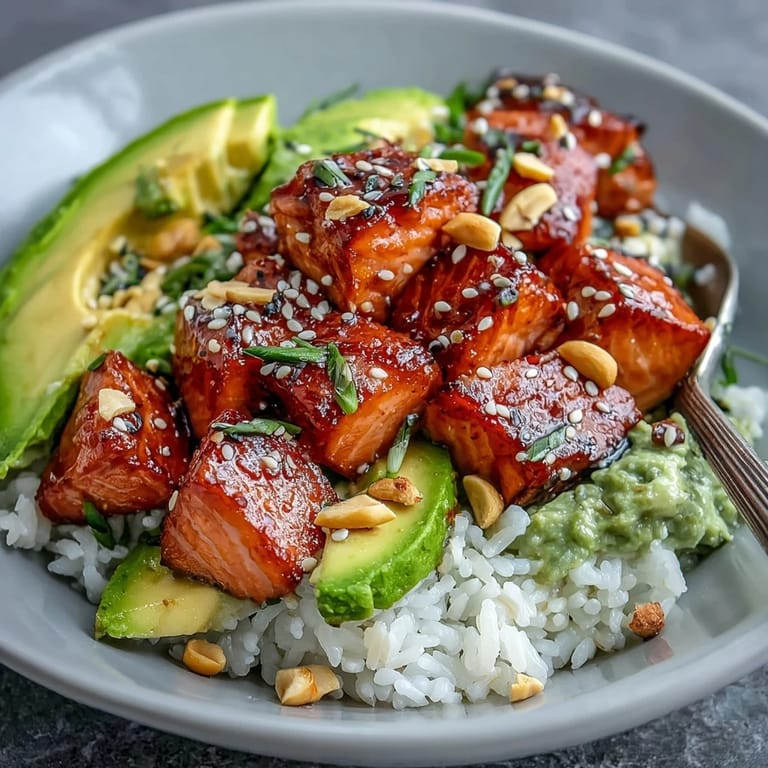
Save There's something almost meditative about assembling a bowl like this one—layers of warm rice, silky salmon, cool avocado—each component waiting for its moment. I discovered this particular combination on a Tuesday afternoon when I was rummaging through my fridge with no real plan, just a block of salmon and an avocado that needed rescuing. What started as improvisation became my go-to lunch, the kind of meal that feels both indulgent and honest.
My sister watched me build one of these bowls last summer and asked if I could make it for her book club potluck. I doubled the recipe, packed everything carefully, and the way people's eyes lit up when they took that first bite—dripping with sesame oil, balancing heat and creaminess—that's when I realized this wasn't just lunch anymore. It was something I wanted to share.
Ingredients
- Fresh salmon fillet: 250 grams, skinless and cut into bite-sized cubes—quality matters here because the fish is the star, not hidden under sauce.
- Tamari sauce: 2 tablespoons, the umami backbone that makes everything taste intentional and rich.
- Toasted sesame oil: 1 teaspoon, a little goes a long way and transforms simple ingredients into something fragrant.
- Rice vinegar: 1 teaspoon for the marinade, plus 1 tablespoon more for the rice—it brightens everything it touches.
- Honey or agave syrup: 1 teaspoon to balance the savory elements and add a subtle sweetness to the marinade.
- Cooked sushi rice: 200 grams or about 1 cup uncooked—use the short-grain kind, it clings together beautifully.
- Sugar: 1/2 teaspoon mixed into the rice for that authentic sushi rice flavor.
- Salt: Just a pinch for the rice, then taste and adjust as you go.
- Ripe avocado: 1 large one, and choosing the right ripeness (soft but not mushy) makes all the difference.
- Roasted peanuts: 2 tablespoons roughly chopped, bringing crunch that keeps every bite interesting.
- Chili oil: 1 tablespoon as a starting point—you can always add more if you want heat.
- Wasabi paste: 1 teaspoon, a small dab goes a long way and clears your sinuses in the best way.
- Nori sheets: 1 sheet cut into strips for that mineral, ocean-like flavor and visual appeal.
- Cucumber: 1 small one, thinly sliced to add refreshing crunch and contrast.
- Spring onions: 2 of them, sliced to bring a sharp, oniony bite that lifts the entire bowl.
- Toasted sesame seeds: 1 tablespoon scattered at the end for nutty flavor and a polished look.
- Fresh cilantro or microgreens: Optional but recommended—they add a brightness and visual finish that says you care.
- Lime wedges: For squeezing over at the table, letting each person control their own acidity level.
Tired of Takeout? 🥡
Get 10 meals you can make faster than delivery arrives. Seriously.
One email. No spam. Unsubscribe anytime.
Instructions
- Build your marinade:
- In a medium bowl, whisk together the tamari, sesame oil, rice vinegar, and honey until the sugar dissolves. The mixture should smell fragrant and balanced—not too sharp, not too sweet.
- Marinate the salmon:
- Add your salmon cubes to the bowl and toss gently to coat everything evenly. Cover and refrigerate for 10 to 15 minutes—this is enough time for the flavors to sink in without making the fish mushy or overly 'cooked' by the acid.
- Season your rice:
- In a separate bowl, combine your warm cooked sushi rice with rice vinegar, sugar, and salt, folding gently with a wooden spoon or rice paddle. The grains should glisten slightly and taste subtly sweet and tangy.
- Prep all your toppings:
- While the salmon sits, slice your avocado, chop the peanuts, cut the nori into strips, slice the cucumber and spring onions thinly, and have everything ready on your cutting board. There's a moment of calm satisfaction when everything is organized and waiting.
- Assemble the bowls:
- Divide the seasoned rice between two serving bowls, pressing it gently to create a slight indent. This gives you a canvas for everything else.
- Layer your components:
- Arrange the marinated salmon, avocado slices, cucumber ribbons, and spring onions over the rice in whatever pattern appeals to you—there's no wrong way to do this. I like to create little pockets where different flavors sit next to each other.
- Add heat and spice:
- Drizzle with chili oil in a thin spiral, then dot a small amount of wasabi paste where you'd like little bursts of heat. A tiny dab is enough—you're adding an accent, not overwhelming the bowl.
- Finish with crunch and shine:
- Sprinkle roasted peanuts, sesame seeds, and nori strips over the top, then add cilantro or microgreens if you have them. Serve with lime wedges so people can adjust the acidity to their taste.
 Save
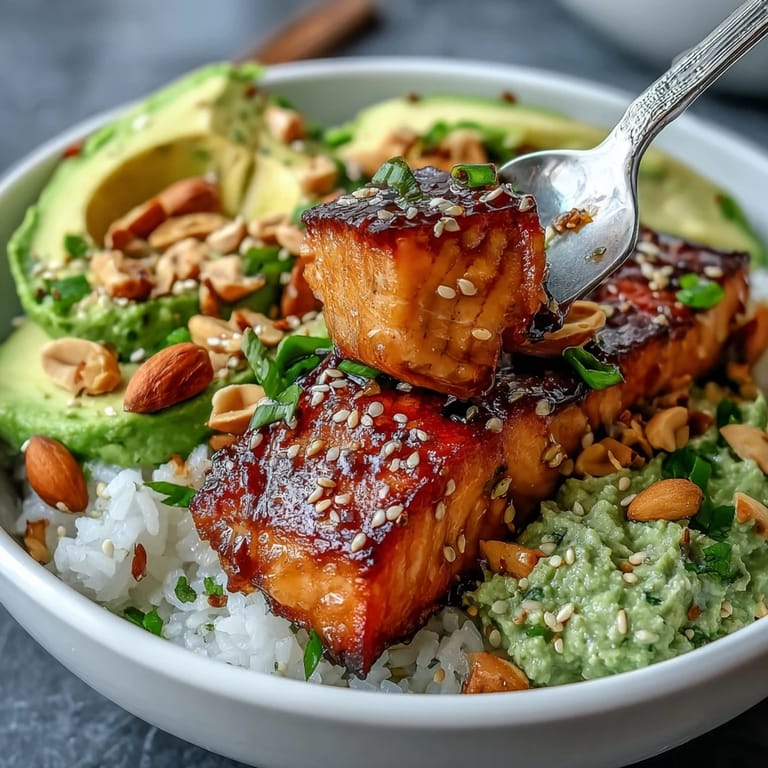
Save There was an evening when I made this for someone I was trying to impress, and instead of feeling stressful, it felt like a love language—arranging each component with care, knowing they'd taste the intention in every bite. Food has a way of saying things words can't.
The Art of Customization
This bowl exists in a beautiful gray area where it's both a recipe and a suggestion. Once you've made it once, you'll notice that the structure—marinated protein, seasoned rice, fresh vegetables, textural crunch, spice, acid—is what matters. The specific ingredients are just one conversation you can have with this format. I've made it with marinated tofu on mornings when I wanted something lighter, with leftover roasted chicken on nights when I had it on hand. Cashews replace peanuts without missing a beat. The marinade stays consistent because that's where the soul lives, but everything else is open to interpretation.
Building Flavors That Play Together
What makes this bowl sing is the way each component has a role. The warmth of the rice grounds everything, the cool avocado brings richness, the vegetables add crunch and freshness, the peanuts supply texture, the wasabi and chili oil provide heat and intrigue. The sesame oil and tamari in the marinade are doing the heavy lifting flavor-wise, so they deserve quality versions if your budget allows. When you understand how these pieces work together, you stop following the recipe and start playing with it, trusting your instincts about what tastes good and what balance feels right.
Storage and Make-Ahead Tips
The best part about this bowl is that most components hold beautifully in the refrigerator. You can marinate the salmon the night before, store the seasoned rice in a sealed container, prep your vegetables and keep them in separate small bowls. The morning you want to eat it, assembly takes maybe five minutes. Some people keep everything separate and assemble fresh, which means you get that warm rice against cool toppings every single time. Others refrigerate the finished bowl and eat it cold the next day, which changes the experience entirely—less textural contrast, but somehow more cohesive, like all the flavors have made friends overnight.
- Keep the chili oil and wasabi separate until serving so they stay potent and don't get watered down by other ingredients.
- If you're meal prepping, don't slice the avocado until you're ready to eat—it oxidizes and browns faster than you'd think.
- The nori stays crispiest when added right before eating, and the sesame seeds keep their toasty aroma that way too.
 Save
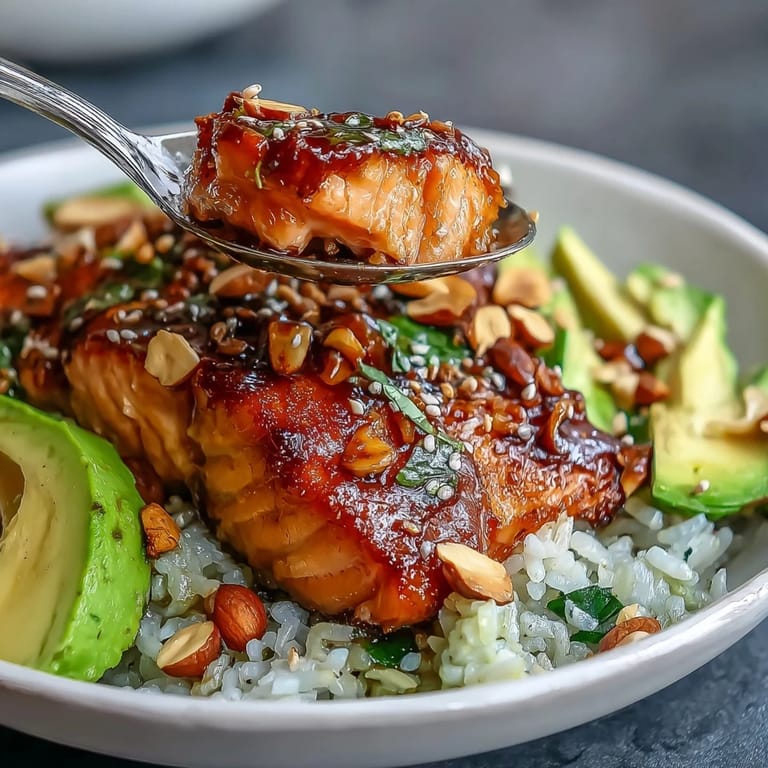
Save This bowl has become something I reach for when I want to feel good, taste something interesting, and not spend hours in the kitchen. That's worth keeping around.
Recipe FAQs
- → How should the salmon be prepared for optimal flavor?
Cut the salmon into bite-sized cubes and marinate it for 10-15 minutes in a blend of tamari, toasted sesame oil, rice vinegar, and honey or agave to infuse rich umami and subtle sweetness.
- → Can I substitute the nuts if allergic to peanuts?
Yes, cashews are a good alternative or you can omit nuts entirely to accommodate allergies without compromising texture.
- → What level of spice can be expected from the chili oil and wasabi?
Adjust the chili oil and wasabi paste to taste; both ingredients provide layers of heat ranging from mild warmth to more intense spice.
- → Is there a vegetarian version of this dish?
Salmon can be replaced with marinated tofu or tempeh to offer a plant-based alternative while maintaining similar flavor profiles.
- → How is the rice seasoned in this bowl?
Cooked sushi rice is mixed with rice vinegar, sugar, and a pinch of salt, providing a slightly tangy and balanced base for the toppings.