 Save
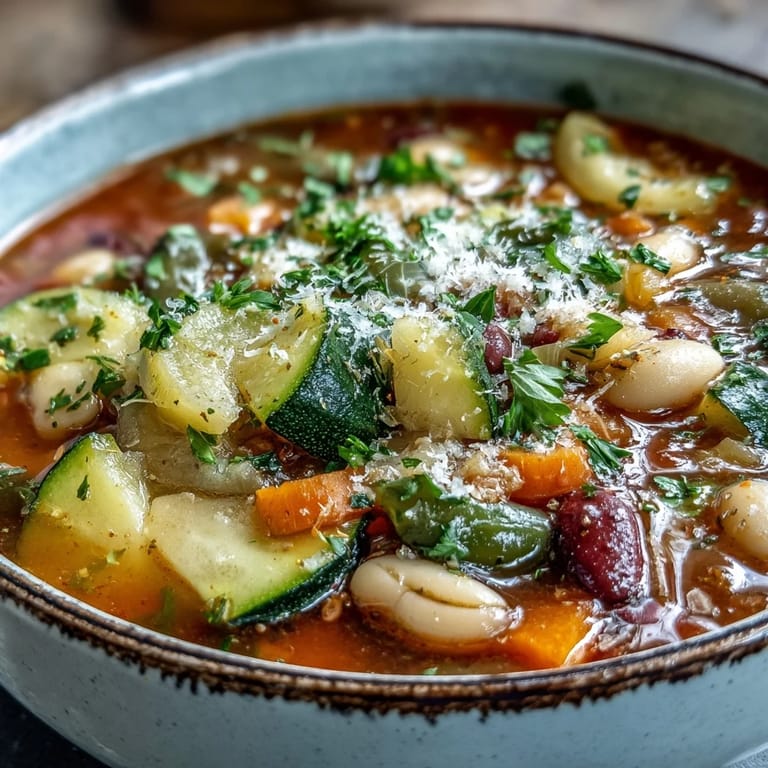
Save The first time I made minestrone, it was a rainy Tuesday and I had a crisper drawer full of vegetables that needed using. My Italian neighbor had mentioned that minestrone translates to "big soup" and that the whole point was to use whatever you have on hand. That afternoon, I discovered that this humble soup has a way of making the house feel warmer before you even sit down to eat.
Last winter, my sister came over unexpectedly when I had a pot simmering on the stove. She kept hovering around the kitchen, asking what smelled so incredible. We ended up eating the entire batch while standing at the counter, and she still asks me to make it every time the weather turns cold.
Ingredients
- Olive oil: Use a good quality extra virgin olive oil since the fat carries so much flavor in this vegetable forward soup
- Yellow onion: Sweet onions work beautifully here and form the aromatic foundation with carrots and celery
- Carrots and celery: Slice them into thin coins so they soften evenly and dont require longer cooking time
- Garlic: Add it after the initial vegetables have softened so it doesnt burn and turn bitter
- Zucchini and potato: The potato adds creaminess while zucchini contributes texture without overpowering other flavors
- Green beans: Fresh green beans hold their shape better than frozen ones and add a lovely pop of color
- Diced tomatoes: The canned tomatoes provide acidity that balances the sweetness of the vegetables
- Cannellini beans: These creamy white beans are traditional and hold their shape beautifully during simmering
- Small pasta: Ditalini, elbow macaroni, or small shells work perfectly because they spoon up easily with the broth
- Vegetable broth: A quality broth makes a huge difference so use one you enjoy drinking on its own
- Dried Italian herbs: A blend of oregano, basil, and thyme provides that classic Italian flavor profile
- Baby spinach or kale: Stirred in at the very end so it stays bright and doesnt turn mushy
- Fresh parsley: Adds a bright, fresh finish that cuts through the rich, hearty broth
Tired of Takeout? 🥡
Get 10 meals you can make faster than delivery arrives. Seriously.
One email. No spam. Unsubscribe anytime.
Instructions
- Build your flavor base:
- Heat the olive oil in a large pot over medium heat, then add the onion, carrots, and celery. Sauté for about 5 minutes until the vegetables soften and the kitchen starts to smell wonderful.
- Add more vegetables:
- Stir in the garlic, zucchini, potato, and green beans. Cook for another 3 minutes to soften everything slightly before adding liquid.
- Create the soup base:
- Pour in the diced tomatoes, cannellini beans, vegetable broth, dried herbs, and bay leaf. Bring everything to a gentle boil while stirring to combine.
- Simmer together:
- Reduce the heat, cover the pot, and let it simmer for 20 minutes. This allows all the flavors to meld and the vegetables to become tender.
- Add the pasta:
- Stir in the pasta and simmer uncovered for 8 to 10 minutes. Keep an eye on it so the pasta cooks to al dente and doesnt absorb all the broth.
- Finish with greens:
- Remove the bay leaf, then add the spinach or kale and cook for just 2 minutes until wilted. Season with salt and pepper to taste.
- Serve immediately:
- Ladle the hot soup into bowls, garnish with fresh parsley, and sprinkle with Parmesan cheese if desired. Watch it disappear quickly.
 Save
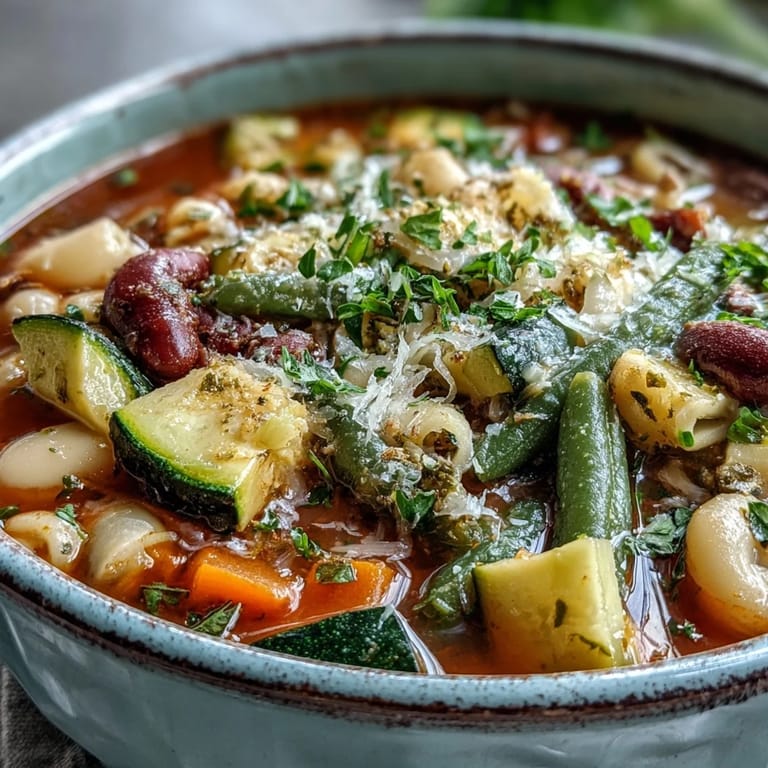
Save This soup became my go to gift for friends who need comfort. There is something deeply satisfying about dropping off a warm container of minestrone, knowing it will taste even better when they reheat it for dinner that night.
Making It Your Own
Minestrone is incredibly forgiving and adaptable. I have made versions with cabbage in winter, added fresh peas in spring, and thrown in whatever vegetables were languishing in my refrigerator. The key is maintaining the balance between beans, pasta, and broth while letting the vegetables change with the seasons.
Serving Suggestions
A thick slice of crusty bread is practically mandatory for soaking up every last drop of the flavorful broth. A simple green salad with a bright vinaigrette provides a nice contrast to the hearty, comforting soup. If you want to make it a more substantial meal, a light white wine like Pinot Grigio complements the vegetables beautifully.
Storage and Reheating
The soup keeps well in the refrigerator for up to four days and actually develops more flavor as it sits. When reheating, add a splash of water or broth because the pasta will have absorbed quite a bit of liquid. Avoid boiling it aggressively since this can break down the vegetables and make the pasta mushy.
- Freeze individual portions without the pasta for the best results
- Add fresh pasta when reheating frozen portions
- The soup can be made entirely ahead and finished with pasta just before serving
 Save
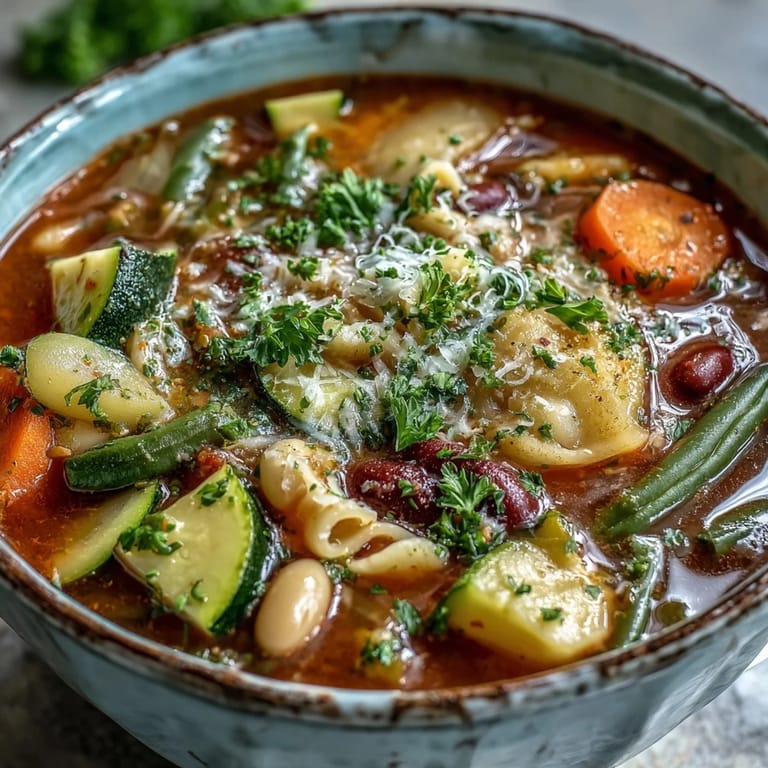
Save There is nothing quite like watching someone take their first spoonful of this soup and see their face relax. Good soup does that to people.
Recipe FAQs
- → What vegetables work best in minestrone?
Traditional minestrone includes onions, carrots, celery, zucchini, potatoes, and green beans. You can also add seasonal vegetables like cabbage, peas, or Swiss chard depending on what's fresh and available.
- → Can I make this gluten-free?
Yes! Simply substitute regular pasta with gluten-free pasta shapes like rice-based corn pasta. The rest of the ingredients are naturally gluten-free, making this an easy adaptation.
- → How long does minestrone keep in the refrigerator?
Minestrone stores beautifully for 4-5 days in an airtight container. The flavors actually develop and improve over time. Note that the pasta will continue to absorb liquid, so you may need to add extra broth when reheating.
- → Can I freeze minestrone soup?
Yes, minestrone freezes well for up to 3 months. For best results, freeze without the pasta and add fresh pasta when reheating. This prevents the pasta from becoming mushy during freezing and thawing.
- → What's the secret to a flavorful broth?
Simmering a Parmesan rind in the broth adds incredible umami depth. Also, sautéing your vegetables before adding liquid creates a caramelized base that enriches the entire soup. Don't forget to remove the bay leaf before serving!
- → What pasta shape is traditionally used?
Ditalini (small tubes), elbow macaroni, or small shells are classic choices. These small shapes hold up well in soup and are easy to scoop up with every spoonful. Choose any small pasta that catches your eye.