 Save
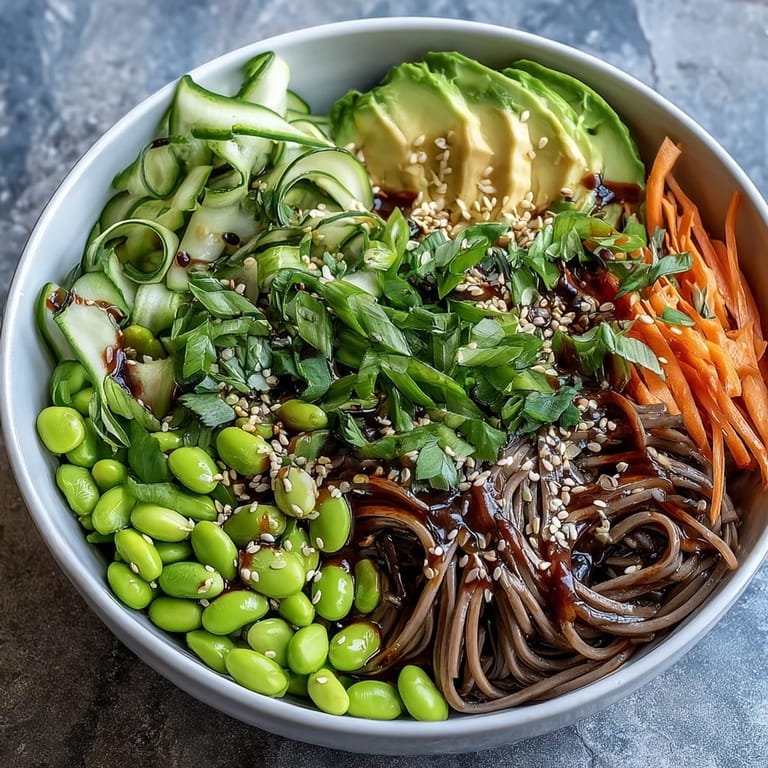
Save There's something about the sound of soba noodles hitting cold water that signals summer to me. My neighbor brought a bowl over one sweltering afternoon, and I was struck by how something so simple—just noodles, vegetables, and a drizzle of sesame—could taste so alive and intentional. I've been making versions ever since, tweaking the dressing until it became something I crave on days when the kitchen feels too hot for anything elaborate.
I made this for my sister's book club potluck, worried the vegetarian option might feel overlooked next to richer dishes. Instead, people came back for thirds, asking about the dressing like it held some secret. That night taught me that restraint and quality ingredients speak louder than complexity.
Ingredients
- Dried soba noodles (250 g): Look for 100% buckwheat if you're avoiding gluten, though the traditional stuff has a nuttier depth that's hard to replicate.
- Shelled edamame (1 cup): Fresh or frozen works equally well, and they add both protein and a pop of color that catches the eye.
- Cucumber (1 medium, julienned): The crisp, cool contrast is essential here, so don't skip the ice bath if your kitchen is warm.
- Carrots (2 medium, peeled and julienned): A vegetable peeler makes the thin strips happen faster, and they bring natural sweetness to balance the salty dressing.
- Scallions (2, thinly sliced): Slice them just before serving so they stay perky and sharp.
- Toasted sesame seeds (2 tbsp): Buy them already toasted if you can, since toasting at home fills your kitchen with an aroma you won't want to share.
- Fresh cilantro or mint (1/4 cup, optional): A single herb choice is better than mixing; let one flavor lead.
- Soy sauce (3 tbsp): The backbone of the dressing, so use something you'd actually taste on its own.
- Rice vinegar (2 tbsp): The gentle acid that keeps everything bright without being sharp.
- Toasted sesame oil (1 tbsp): A small amount goes a long way, and its aroma should be unmistakable when you open the bottle.
- Tahini or smooth peanut butter (1 tbsp): Creates the creamy texture without cream, a small trick that makes a real difference.
- Honey or maple syrup (1 tbsp): Just enough to round out the salt and acid with gentle sweetness.
- Fresh ginger (1 tsp, grated): Freshly grated, not powdered; the difference matters.
- Garlic clove (1 small, minced): Let your knife do the work slowly so it releases its oils gradually.
- Water (1 tbsp, plus more as needed): The dressing should drizzle smoothly, not sit heavy.
Tired of Takeout? 🥡
Get 10 meals you can make faster than delivery arrives. Seriously.
One email. No spam. Unsubscribe anytime.
Instructions
- Bring water to a boil and cook the soba:
- Follow the package timing exactly—soba noodles go from perfectly chewy to mushy in seconds. Drain them into a colander and rinse under cold running water, stirring gently with your fingers until they're completely cool and no longer sticky.
- Blanch the edamame while noodles cook:
- Drop them into the same boiling water for just 2 to 3 minutes, then scoop them out with a slotted spoon. They should be tender but still have a slight firmness when you bite through the skin.
- Whisk the sesame dressing into smoothness:
- Combine soy sauce, rice vinegar, sesame oil, tahini, honey, ginger, and minced garlic in a small bowl. Whisk steadily until you see no streaks of tahini and the mixture looks creamy. Add water a teaspoon at a time if it seems too thick to drizzle.
- Prepare vegetables with a light hand:
- Julienne the cucumber and carrots into thin, even matchsticks that will catch the dressing. Slice scallions on a bias so they look intentional and scatter better across the bowl.
- Toss noodles with half the dressing:
- In a large bowl, combine the cooled noodles with half of your sesame dressing, using tongs or your hands to coat everything evenly. This prevents the noodles from clumping when they sit.
- Assemble bowls with intention:
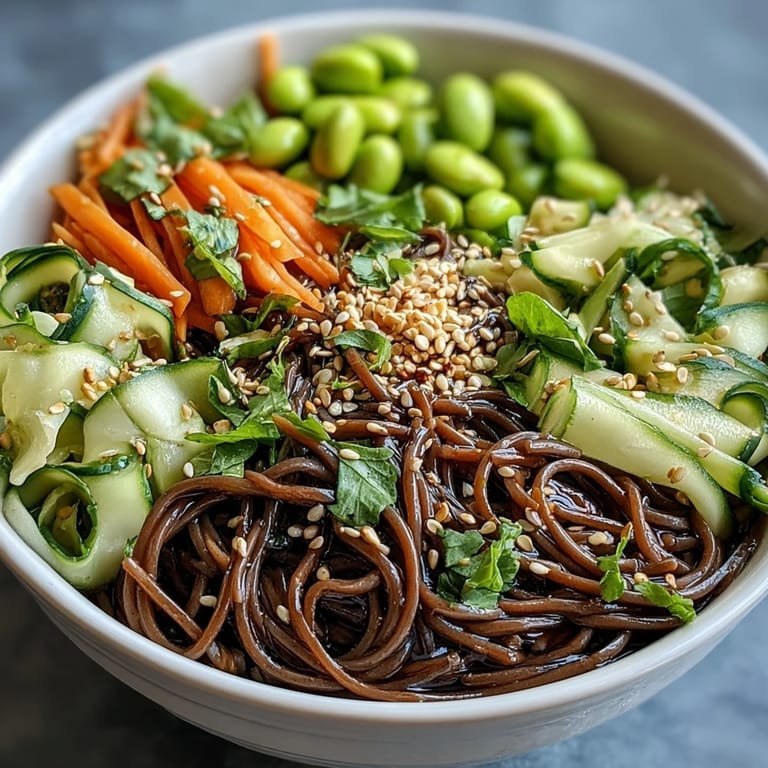
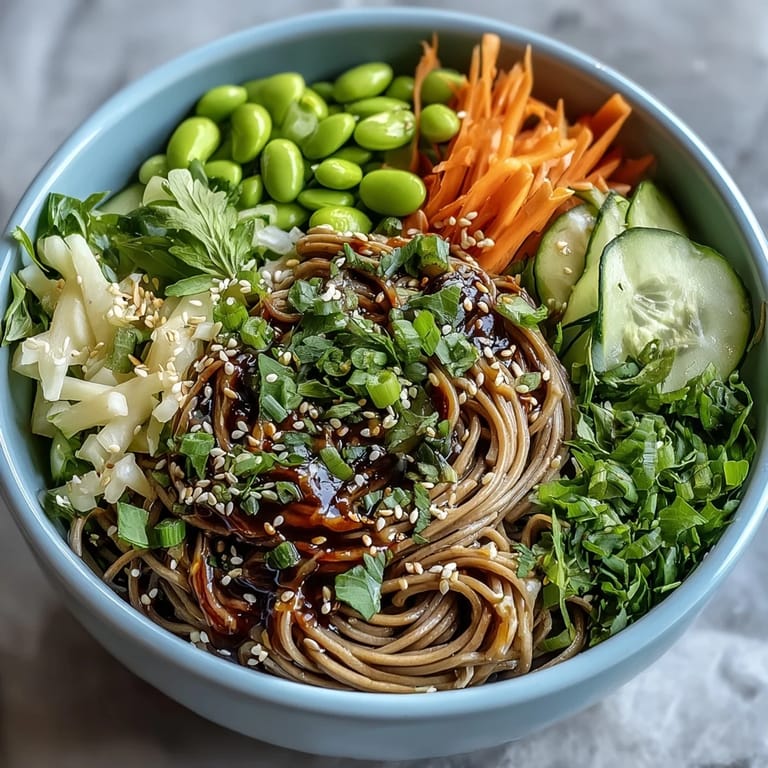
- Divide the dressed noodles among four bowls, then arrange edamame, cucumber, carrots, and scallions on top in loose clusters. Drizzle the remaining dressing over everything so each bite tastes balanced.
- Finish and serve right away:
- Scatter toasted sesame seeds over the top and add fresh herbs if using. Serve immediately while vegetables are still crisp and the bowl feels like it was made just for you.
 Save
Save A friend told me once that she kept a jar of my sesame dressing in her refrigerator for a week, using it on everything from roasted vegetables to cold chicken. That's when I realized this bowl isn't really a recipe at all—it's permission to stop overthinking lunch.
The Sesame Dressing as Your Secret Weapon
This dressing works on so much more than noodles. I've spooned it over steamed broccoli, drizzled it on grilled tofu, mixed it into grain bowls, and even used it as a marinade for summer vegetables. Once you taste how the ginger and garlic play against the toasted sesame oil, you'll understand why it deserves its own small jar in your refrigerator, ready to rescue any plate that feels like it needs bringing to life.
Building Flavor Without Heat
This is a cold dish, which means every ingredient has to carry its weight without the help of warmth to amplify flavors. The sesame oil becomes more fragrant, the ginger sharper, the vinegar brighter. It's a good lesson in how temperature changes what we taste, and why the ratio of acid to salt to richness matters so much when everything is served chilled.
Making It Your Own
The foundation here is solid, but this bowl loves experimentation. Swap in whatever vegetables look good at the market, or top it with a soft-boiled egg if you want the richness of a runny yolk mingling with the dressing. Some people add crispy fried shallots, others layer in grilled tofu or mushrooms that have absorbed the sesame marinade.
- Substitute snap peas, bell peppers, radishes, or shredded beets for variety without changing the character of the dish.
- Top with grilled tofu, a soft-boiled egg, or roasted tempeh if you want more protein to make this feel like a full meal.
- Keep extra dressing on hand—it keeps for a week and transforms even the simplest leftovers into something worth looking forward to.
 Save
Save This bowl exists in that perfect middle space between healthy and indulgent, fast and thoughtful. Make it on a day when you want to eat well without the effort feeling like punishment.
Recipe FAQs
- → Are soba noodles gluten-free?
Traditional soba noodles contain wheat and buckwheat. For gluten-free options, look for 100% buckwheat noodles and substitute tamari for soy sauce.
- → Can I make this bowl ahead?
Yes! Prepare components up to 2 days in advance. Store noodles and dressing separately, then assemble when ready to serve. Add fresh herbs just before eating.
- → What vegetables work best?
Cucumber, carrots, and scallions provide crisp texture. You can also add snap peas, bell peppers, radishes, or shredded cabbage for variety and color.
- → How can I add more protein?
Top with grilled tofu, baked tempeh, shredded chicken, soft-boiled eggs, or edamame. The sesame dressing pairs well with most proteins.
- → What can I substitute for tahini?
Smooth peanut butter, almond butter, or cashew butter work well. For nut-free versions, use sunflower seed butter or omit entirely with extra sesame oil.