 Save
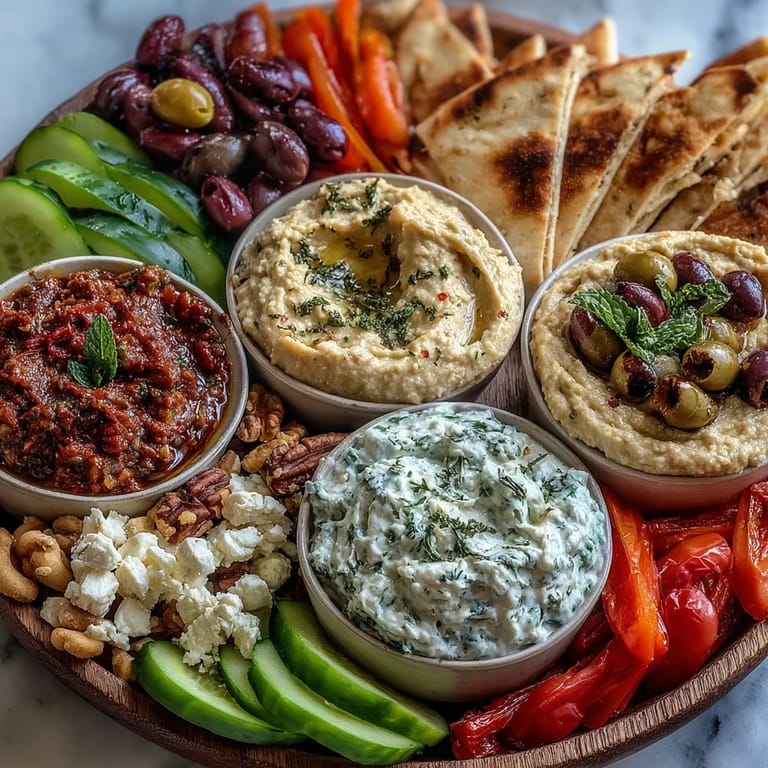
Save Last summer, I found myself hosting a spontaneous brunch when friends texted that they'd be in town for exactly three hours. Instead of panicking, I remembered a Mediterranean platter I'd assembled years ago at a restaurant in Athens—not a formal meal, but this glorious mess of dips, vegetables, and bread that somehow made everyone linger longer than planned. That afternoon, I recreated it from memory, and what started as damage control became the meal people actually wanted to eat. Now whenever I need to feed a group without the fuss of a sit-down dinner, this board appears on my table.
I made this for my neighbor's book club, and what was supposed to be a two-hour gathering turned into four because people kept grazing and talking instead of leaving. Someone even asked for the recipe, which is how I knew the flatbreads were crispy enough and the tzatziki had that perfect cold tang. It taught me that sometimes the best entertaining happens when you're not hovering over a hot stove.
Ingredients
- Hummus: The creamy base that holds everything together, and making it yourself means you control how much garlic sneaks in.
- Tzatziki sauce: Cooling, refreshing, and the cucumber needs to be wrung out like it owes you money or you'll end up with watery sauce.
- Baba ganoush: Roasting the eggplant until it collapses is the only way to get that smoky, velvety texture that makes people ask what it is.
- Roasted red pepper dip: Store-bought is perfectly fine here, saving you one step when you're already juggling three other things.
- Fresh cucumber: Slice it the morning of, or it'll weep and make your board soggy by serving time.
- Cherry tomatoes: Halving them releases a little juice that becomes part of the eating experience, which sounds fancy but is just delicious.
- Bell pepper: Any color works, but I choose red or yellow because they're sweeter and more visually interesting.
- Assorted olives: The briny ones are non-negotiable, a salty counterpoint to all the creamy dips and soft cheese.
- Feta cheese: Crumble it just before serving so it stays crumbly instead of settling into dense little clumps.
- Mixed nuts: Toast them lightly if you have five minutes, but don't skip them because they're your textural contrast.
- Pita and flatbreads: Warming them in a dry skillet for 30 seconds before cutting makes them pliable and toasty at the same time.
- Olive oil: The finishing drizzle that makes everything taste intentional, not accidental.
- Fresh herbs: Oregano and parsley aren't just decoration, they add a brightness that ties the whole board together.
Tired of Takeout? 🥡
Get 10 meals you can make faster than delivery arrives. Seriously.
One email. No spam. Unsubscribe anytime.
Instructions
- Blend the hummus:
- Drop your chickpeas, tahini, lemon juice, and garlic into the food processor and let it run until you've got something that looks like silky peanut butter. Add water a splash at a time until it's creamy but not soupy, tasting as you go because sometimes a pinch more salt is the difference between good and memorable.
- Chill the tzatziki:
- Grate your cucumber and squeeze it in a clean kitchen towel like you're wringing out resentment, then mix it with yogurt, garlic, dill, and olive oil. Stick it in the fridge for at least an hour so the flavors settle and it gets thick and cold.
- Roast and blend the baba ganoush:
- Halve your eggplant, score the flesh, and roast it at 400°F until it collapses into itself, about 30 to 35 minutes. Scoop out the soft inside, blend it with tahini, olive oil, and lemon juice until it's creamy, and taste before deciding if it needs more salt.
- Spoon dips into vessels:
- Transfer each dip to its own bowl or ramekin so they don't mingle and lose their individual personalities. This also makes it easier for guests to control how much of each they want.
- Arrange your foundation:
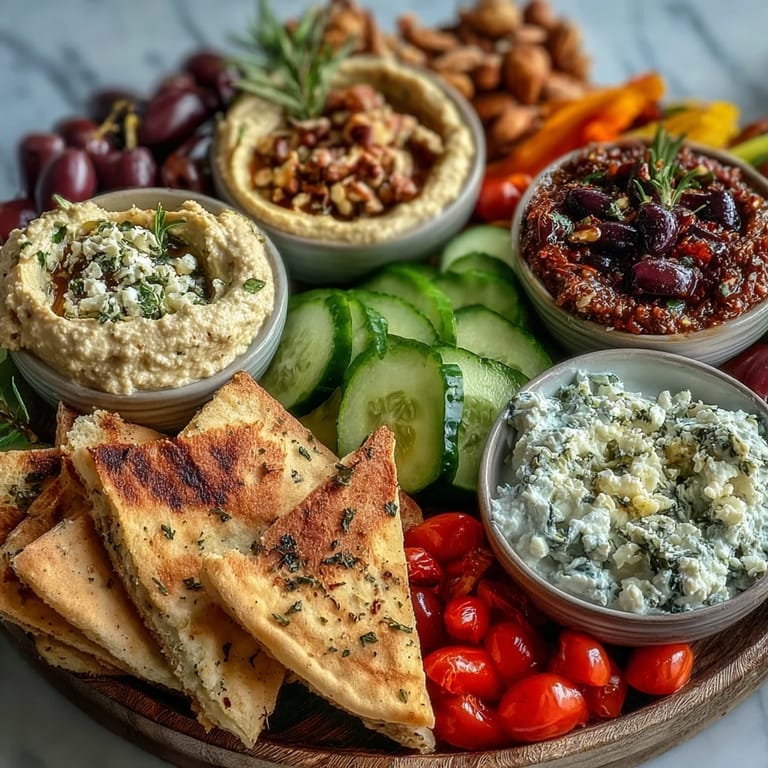
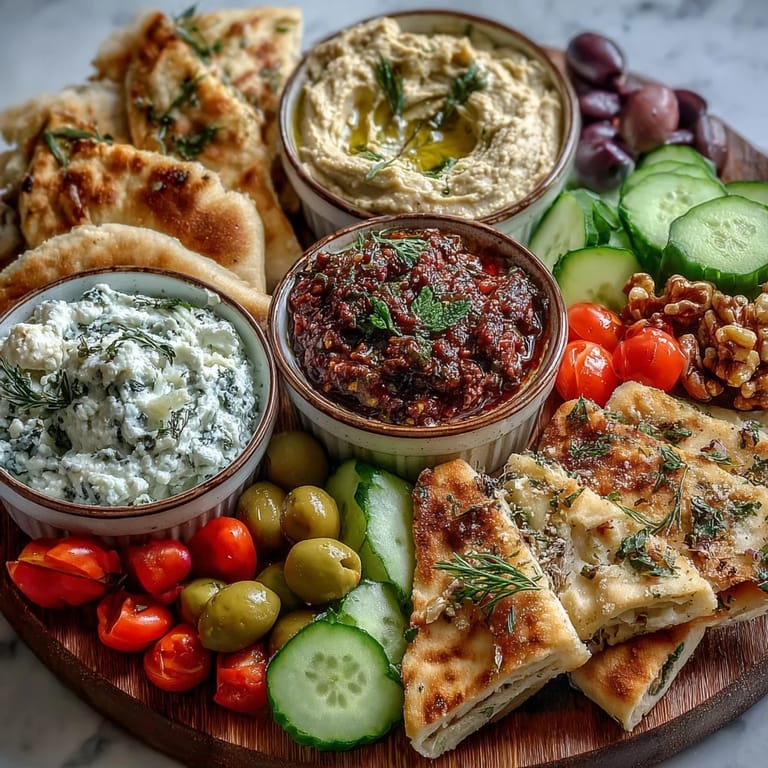
- Place the bowls of dips on your largest, flattest serving surface, spacing them so there's room to build around them. Think of them as anchor points in a landscape you're about to create.
- Add the vegetables:
- Arrange cucumber slices, tomato halves, and bell pepper strips in clusters around the dips, creating pockets of color. Don't worry about perfection here, rustic and abundant looks better than rigid anyway.
- Scatter cheese and olives:
- Sprinkle crumbled feta across open spaces, then dot the board with olives, letting them sit in little pools of their own brine. The feta and olives should complement, not compete with, the dips.
- Fill remaining gaps with nuts:
- Create small piles of mixed nuts in empty corners to add crunch and visual interest. These are the textural surprise that keeps people reaching back for more.
- Add bread pieces:
- Arrange warm pita triangles and flatbread strips around the edge or in a separate section, making them easy to grab without knocking over the dips. Warm bread is always more inviting than cold bread.
- Finish with oil and herbs:
- Drizzle olive oil across the entire board in a loose, generous pattern, then shower the whole thing with fresh oregano and parsley. This final step transforms it from nice to stunning.
- Serve with intention:
- Bring it to the table and let people dive in, encouraging them to mix flavors and try unexpected combinations. The best part of a board like this is when someone discovers their own favorite pairing.
 Save
Save My kid once asked why we couldn't just eat regular food for breakfast, then tried the baba ganoush and asked if we could have it every Sunday. That's when I realized this isn't just a board of snacks, it's a conversation starter and a moment when people slow down and actually enjoy eating together instead of rushing through the day.
The Art of Building a Board
What I've learned about platter building is that it's less about following rules and more about creating visual rhythm and balance. Start with your dips as anchors, then build outward in layers of color and texture, making sure no single ingredient dominates the entire space. The goal is abundance without chaos, where every corner invites you to explore.
Make-Ahead Magic
The secret to this recipe is that almost everything improves when made a day ahead. The dips develop deeper flavors when they've had time to sit, the tzatziki becomes tangier and more cohesive, and the baba ganoush gains complexity. On the day of serving, you're simply assembling, which means you actually get to enjoy your guests instead of wiping eggplant off your apron.
Variations That Keep Things Fresh
Once you master the basic board, you can play with add-ins that match your mood or what you find at the market. Marinated artichoke hearts, sun-dried tomatoes, crispy chickpeas, or even some whipped feta mixed with herbs become personal signatures that make your version distinct. The beauty of this format is that it's flexible enough to incorporate whatever sounds good to you.
- Add roasted vegetables like zucchini or cauliflower for depth, especially if you want to make it heartier.
- Include whipped ricotta or labne as another creamy option that gives guests more choices.
- Try dukkah or za'atar sprinkled over the dips for a spiced kick that feels upscale without extra effort.
 Save
Save This board has become my answer to the question of how to feed people well without losing your mind. It's simple enough that even a rushed morning works, elegant enough that you feel proud setting it out, and delicious enough that people actually remember it.
Recipe FAQs
- → Can I prepare the dips in advance?
Absolutely. All dips actually develop better flavor after resting in the refrigerator for 24 hours. Store each in airtight containers and bring to room temperature 30 minutes before serving.
- → What vegetables work best on this platter?
Cucumber, cherry tomatoes, and bell peppers are classic choices. You can also add radishes, carrot sticks, raw cauliflower florets, or blanched green beans for variety and color.
- → How can I make this board vegan?
Simply omit the feta cheese or substitute with a vegan alternative. Ensure your tzatziki uses plant-based yogurt, and all dips remain naturally vegan otherwise.
- → What bread options work well?
Traditional pita, naan, lavash, or homemade flatbreads all pair beautifully. For gluten-free guests, offer rice crackers, gluten-free flatbreads, or fresh vegetable crudités as alternatives.
- → How long does this platter stay fresh?
Best served within 2 hours of assembly at room temperature. If preparing ahead, arrange vegetables and store separately from dips to maintain freshness and texture.
- → Can I customize the nuts and olives?
Certainly. Marcona almonds, roasted cashews, or pine nuts add elegance. Castelvetrano olives, niçoise, or oil-cured varieties bring different flavor profiles to match your preferences.