 Save
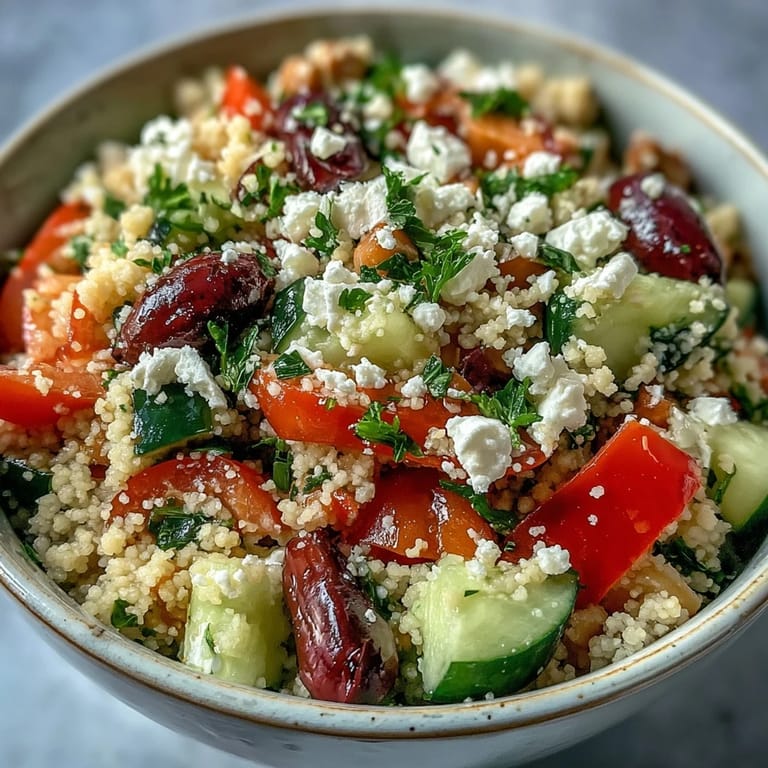
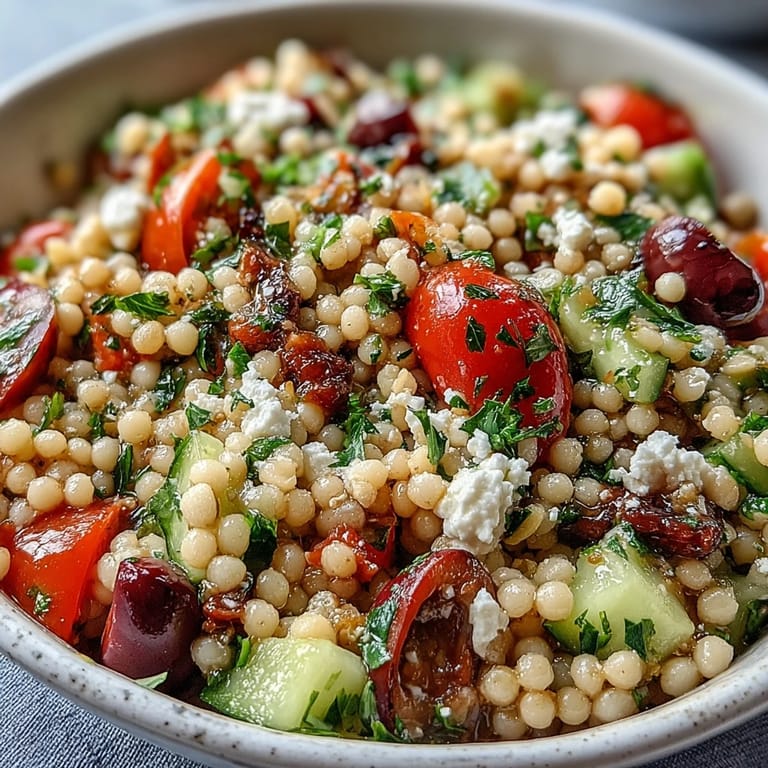
Save Last summer, a friend brought this salad to a rooftop dinner, and I watched people go back for thirds—something that rarely happens with grain bowls. The way the warm couscous absorbed the vinaigrette while the vegetables stayed crisp felt like a small kitchen miracle, and I realized I'd been overcomplicating Mediterranean food in my head for years. That evening taught me that sometimes the best dishes are the simplest ones, built on quality ingredients and a little patience while things cool just right.
I made this for a potluck once without telling anyone what was in it, and someone swore they tasted garlic—there wasn't any. That's when I learned that oregano and good olive oil can convince your mouth of almost anything, and that confidence in simple ingredients is worth more than a crowded spice cabinet.
Ingredients
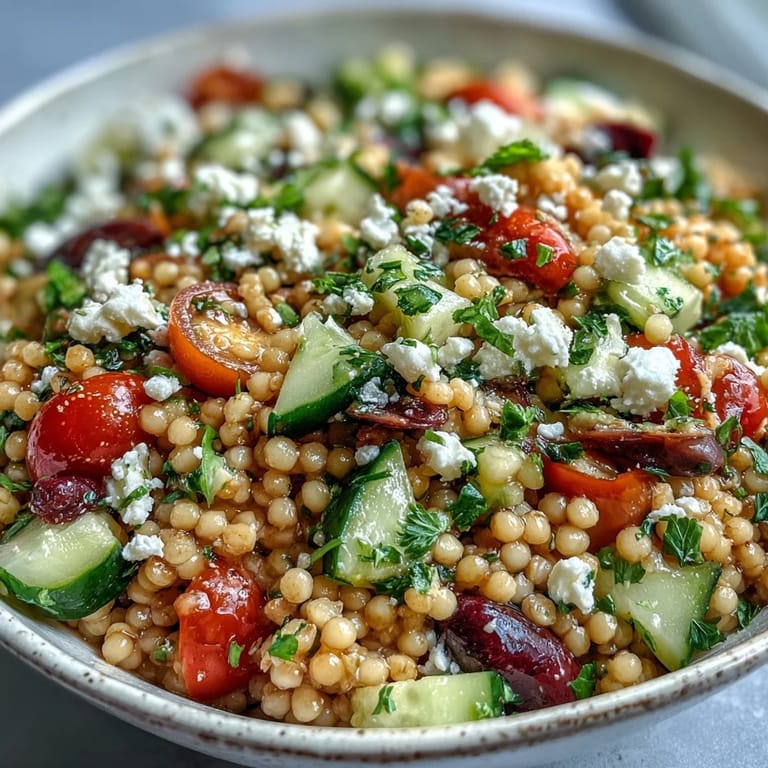
- Pearl couscous (1 cup): These little pearls toast beautifully and have a tender-chewy texture that regular couscous can't match; they hold up to dressing without turning mushy.
- Vegetable broth (2 cups): Use the good stuff if you can—it's the invisible backbone that seasons everything from the start.
- Red bell pepper (1 medium, diced): The sweetness balances the briny olives and sharp vinegar, so don't skip it or substitute with green.
- Cucumber (1 medium, diced): Cut it just before mixing so it stays crisp and doesn't weep liquid into your bowl.
- Cherry tomatoes (1 cup, halved): These burst with acid and sweetness—the soul of the dish, really.
- Red onion (1/4 cup, finely chopped): Raw red onion has a bite that mellows slightly as it sits, becoming more pleasant by the next day.
- Kalamata olives (1/4 cup, pitted and chopped): These briny little gems add depth that can't be faked, so choose good ones.
- Feta cheese (1/4 cup, crumbled): The final flourish that makes everything taste intentional and special.
- Fresh parsley (1/4 cup, chopped): Add this last so it stays bright green and doesn't bruise or darken.
- Olive oil (2 tablespoons): This is not the time for the cheapest bottle—the dressing needs an oil with personality.
- Red wine vinegar (1 tablespoon): The acidity wakes up every element, so taste as you go and adjust if your vinegar is particularly strong.
- Dried oregano (1 teaspoon): This herb was made for Mediterranean vegetables, and a little goes a long way.
- Salt and pepper: Don't be shy—season in layers, tasting as you build.
Tired of Takeout? 🥡
Get 10 meals you can make faster than delivery arrives. Seriously.
One email. No spam. Unsubscribe anytime.
Instructions
- Toast and hydrate your couscous:
- Bring the broth to a rolling boil, then stir in the pearl couscous and listen for that gentle sizzle as it meets the liquid. Cover and drop the heat low—this quiet 10 minutes is when the magic happens, so resist peeking too often.
- Give it space to cool:
- Spread the warm couscous on a baking sheet so it cools evenly and doesn't steam itself into mushiness. This step feels unnecessary until you taste the difference.
- Build your vegetable base:
- While the couscous cools, combine all your vegetables and olives in a large bowl—this is where you taste and adjust, adding more onion if you like the bite, or holding back if it's too sharp.
- Make your dressing sing:
- Whisk the oil, vinegar, and oregano together in a small bowl, tasting as you go. The dressing should smell bright and feel balanced—not too sharp, not too oily.
- Bring it all together:
- Fold the cooled couscous into the vegetables, pour the dressing over everything, and toss gently so the couscous doesn't break apart. Add the parsley last, right before serving or chilling.
 Save
Save There's a quiet satisfaction in a salad that works as hard at midnight as it does at noon, that you can eat from the same container for two days and look forward to it both times. This dish became my answer to those moments when I needed to feed people but didn't want to spend my evening standing at the stove.
Warm or Chilled—It Works Either Way
Serve this straight from the stovetop while the couscous is still warm and the vinaigrette is thin and flowing, or chill it for thirty minutes and watch the flavors knit themselves together into something more cohesive. I've loved it both ways, though I tend to chill it in summer and serve it barely cooled in cooler months. The temperature doesn't matter as much as the quality of the ingredients and your willingness to taste and adjust.
How to Make It Your Own
This recipe is a foundation, not a rulebook—I've added roasted chickpeas for protein, swapped the cucumber for artichoke hearts when that's what was in the fridge, and thrown in fresh mint when parsley ran out. The only thing I'd never mess with is the ratio of acid to oil in the dressing; that's where the whole thing lives or dies. Everything else is permission to taste as you go and build toward what sounds good to you.
Storage and Life Beyond the First Serving
This salad improves with time in a way that feels almost unfair, keeping well for three days in the refrigerator and tasting better on day two than it did on day one. The vegetables soften slightly and the flavors settle into each other, creating something more unified and intentional than what you had fresh from the bowl. If you're making this for the week, keep the dressing separate and toss it in the morning you plan to eat it, or just accept that it'll be slightly more marinated and call it dinner.
- Store everything in an airtight container to keep the couscous from drying out or absorbing fridge flavors.
- If you're adding chickpeas or other proteins, toss them in at the end so they don't get waterlogged.
- A squeeze of fresh lemon juice right before serving brings everything back to life if it's been sitting for a couple of days.
 Save
Save This is the kind of salad that turns a regular Tuesday into something that feels a little more intentional, a little more like you're taking care of yourself. I hope it becomes something you make again and again, changing it slightly each time until it's less a recipe and more a habit.
Recipe FAQs
- → Can I make this ahead of time?
Yes, this dish actually improves after resting. Refrigerate for up to 3 days in an airtight container—the flavors meld beautifully overnight. Bring to room temperature before serving for best texture.
- → What can I substitute for pearl couscous?
Quinoa makes an excellent gluten-free substitute with similar protein content. Regular couscous works too but has a smaller, softer texture. Adjust cooking time according to package directions.
- → How do I make this vegan?
Simply omit the feta cheese or replace it with a plant-based feta alternative. The couscous itself contains wheat, so choose quinoa if you need gluten-free and vegan options combined.
- → Can I add protein to make it more filling?
Chickpeas, white beans, or grilled chicken breast complement the Mediterranean flavors perfectly. You can also add artichoke hearts or roasted red peppers for extra substance and depth.
- → Should I serve this warm or cold?
Both ways work wonderfully. Warm serving highlights the fluffy couscous texture, while chilled version offers a refreshing salad experience. Let it cool completely if refrigerating to prevent condensation from making it soggy.